The US Barred DeepSeek From Federal Agencies — Reportedly Including Products Built on It. Do You Know What Your Product Is Built On?

By Surya Pratap
October 20, 2026
8 min read
AI & Technology

October 20, 2026
8 min read
 It's in the layersHover to explore
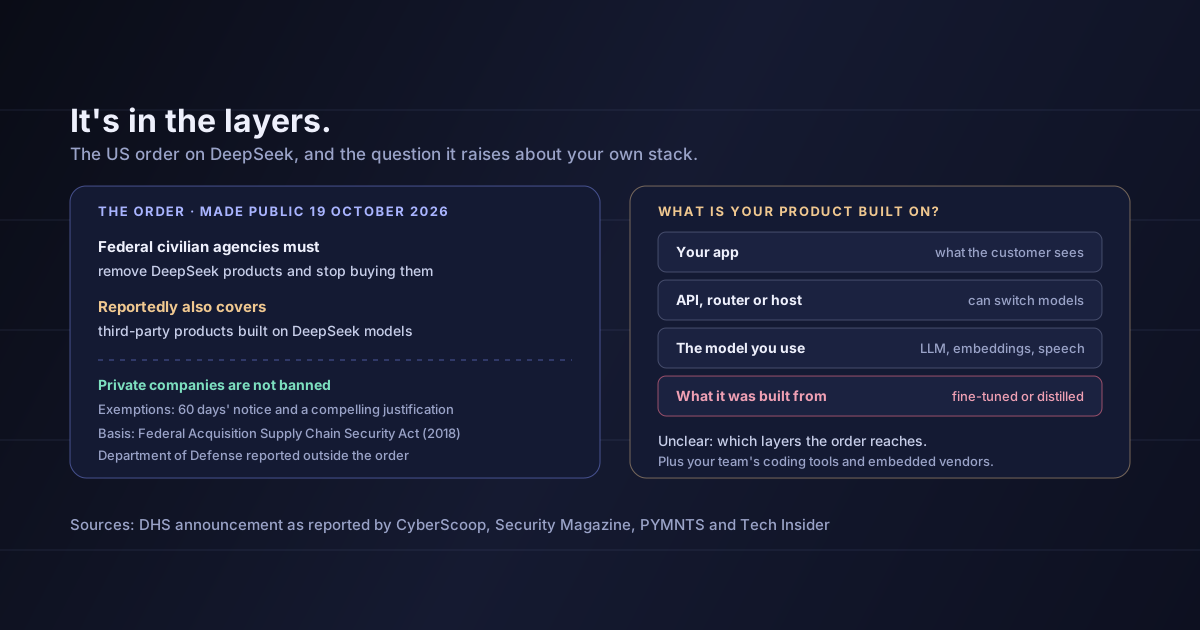
Most AI products do not use one model. They use a hosted API for the main feature, an open-weight model for something cheap, an embedding model nobody remembers choosing, and a coding assistant in the team's editor. Some of those models were fine-tuned or distilled from others. A US order on DeepSeek, made public this week, is the first time many founders will be asked to account for all of it.
This article is based on reporting by CyberScoop, Security Magazine, PYMNTS and Tech Insider, and on the Department of Homeland Security's announcement as they describe it. I have not read the Federal Register notice itself, and the outlets differ on some details, noted below. The reading from section 3 onward is mine, and it is not legal advice.
On 19 October 2026, DHS announced an order under the Federal Acquisition Supply Chain Security Act of 2018 covering Hangzhou DeepSeek Artificial Intelligence and its affiliates. As reported, it requires federal civilian agencies to:
Exemptions require 60 days' advance notice and a "compelling justification", according to CyberScoop. The Department of Defense is reported to be outside the order, which applies to civilian agencies. The notice was due to be published in the Federal Register this week.
DHS Secretary Mullin cited "multiple threat vectors", including "data in servers based in China, where national security laws give the Chinese government wide latitude to request and obtain data", the collection of personal information and digital fingerprints, and data passing to the Chinese government through the "prompt and response" process. Reporting also lists the risk of malware or vulnerabilities introduced through the models.
Private companies are not banned from using DeepSeek by this order.
Several outlets, citing DHS reporting by CNBC and Politico, describe the order as also barring agencies from buying "third-party products and services developed using DeepSeek's technology or AI models." That would close the gap that earlier, narrower restrictions left open: a vendor's chatbot, coding assistant or summariser running on a DeepSeek model, even several layers removed from DeepSeek itself.
Not everyone reports it the same way. CyberScoop's account describes the ban on DeepSeek's own products and says the treatment of third-party products, self-hosted open weights, fine-tunes and distillations is not explicitly addressed. Until the notice text is read closely, the honest position is:
A ban on one company's models becomes a question about every layer of your product, including the layers you never chose directly.
You may not sell to federal agencies. But three groups of buyers often follow federal rules:
For a startup selling into any of them, the question on the next security questionnaire is easy to predict: does your product use, or depend on, any DeepSeek model? The hard part is answering it truthfully.
A "no" has to hold at every layer:
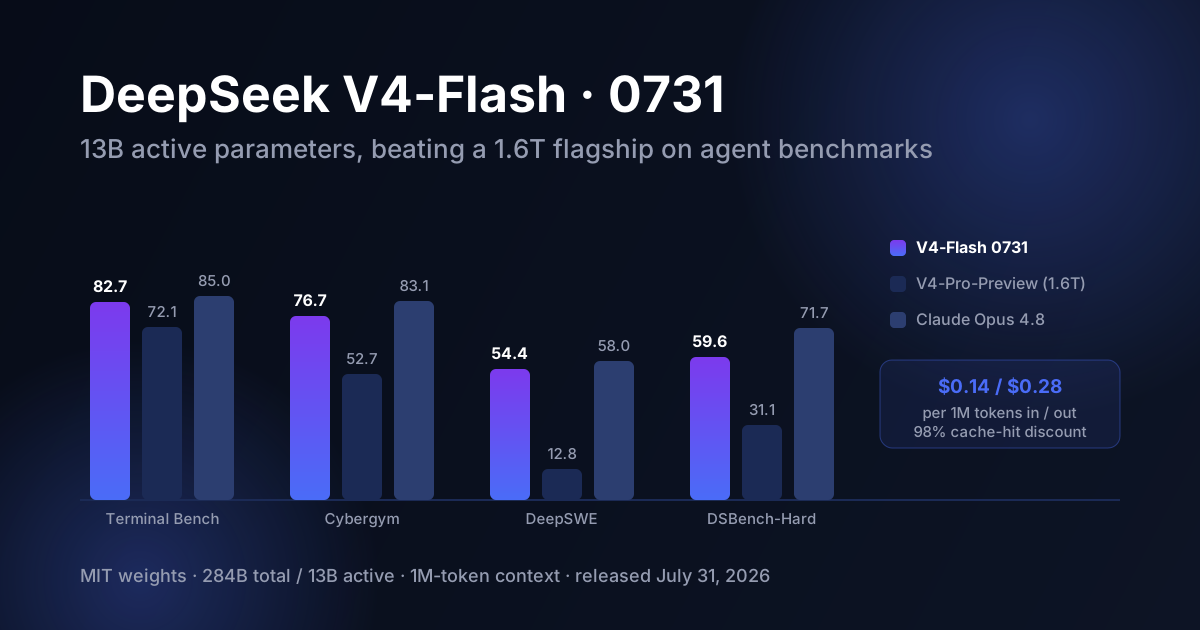
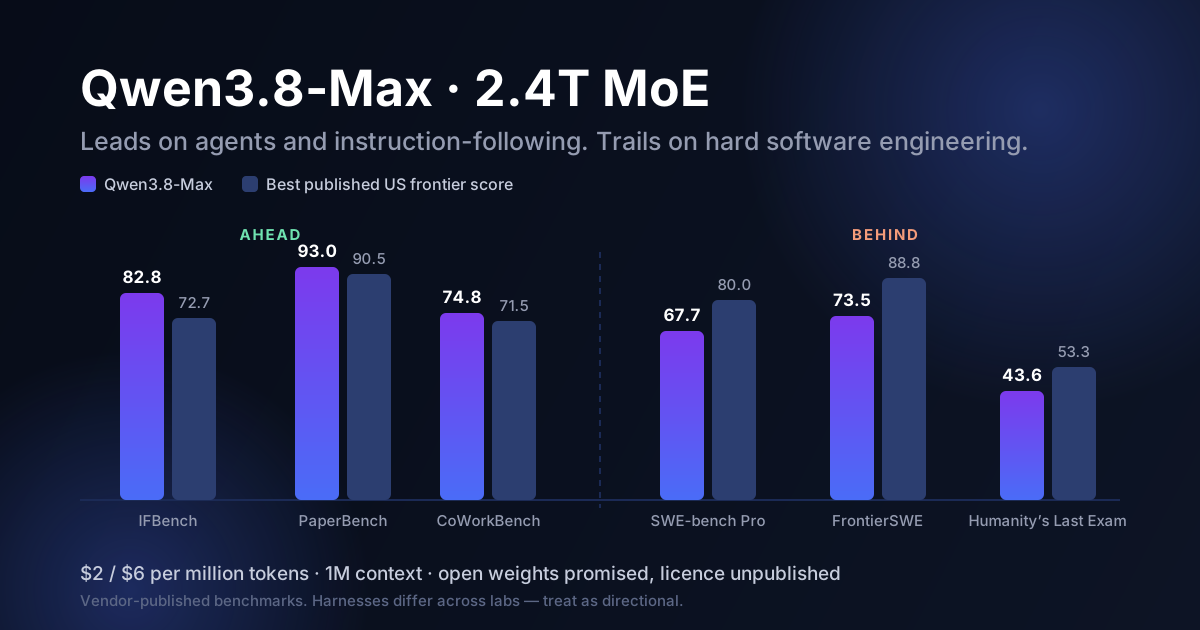
Our guides to DeepSeek V4-Flash and Qwen3.8-Max covered why open-weight models are attractive on price and quality. This order does not change that calculation for most private uses. It changes what you need to be able to prove to some customers.
Write a model bill of materials. One row per model in production: name and version, provider or host, where it runs, what it does in the product, and what it was fine-tuned or distilled from. Include embedding, reranking and speech models, not just the main LLM.
Pin models in code. If you use a router or aggregator, set explicit model IDs for each feature rather than "best available", and log which model served each request. A model you did not choose can still end up in your answer to a questionnaire.
Make a swap cheap. Keep prompts, evaluations and tool definitions independent of one provider, so replacing a model for one customer is a configuration change plus an evaluation run — not a rebuild. Keep your evaluation set ready to prove the replacement works.
Check your vendors and tools. Ask the AI vendors you embed which models they use and whether that can change without notice. Decide which models your team may use in coding tools, especially on code for regulated customers.
Answer the questionnaire you'll get next
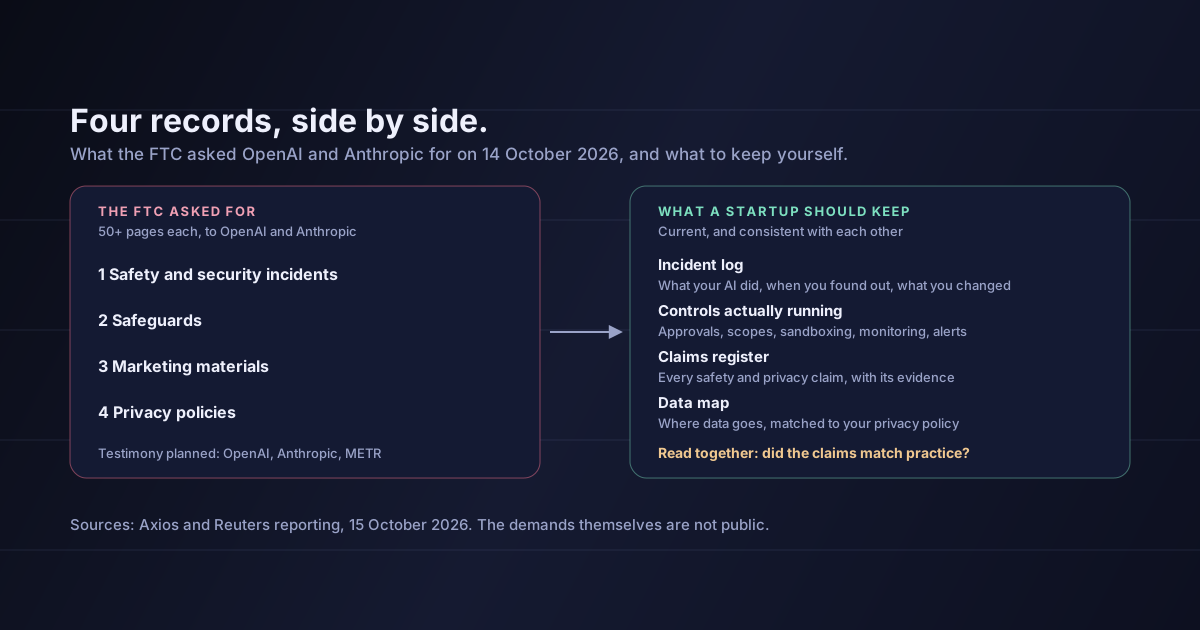
Prepare a short, honest statement now: which models your product uses, where they are hosted, what they are derived from, whether customer data leaves the regions you promise, and how quickly you can replace any one of them. It is the same record regulators are starting to ask for in other contexts, like the FTC's demands to OpenAI and Anthropic.
If a customer needs DeepSeek-free, you will only be able to promise it if you can see your whole stack. If they do not, you will still be able to tell them exactly what they are getting — which is usually what a security team wants.
That startups are banned from using DeepSeek. The order applies to federal civilian agencies and what they buy. Private use is not prohibited by it.
That self-hosted, fine-tuned or distilled models are definitely covered. The reported wording is broad, but the outlets disagree, and the notice text should be read before deciding.
That the dates are settled. CyberScoop reports the order was issued in June and has been in force for months; other outlets give July; publication in the Federal Register was reported for 20 or 21 October.
That DeepSeek's models are unsafe to run. The order is about supply-chain and data-access risk as assessed by the government. It is not a technical finding about any particular model's weights.
DHS has ordered federal civilian agencies to remove DeepSeek products from their systems and stop buying them, under the Federal Acquisition Supply Chain Security Act, citing the risk of data reaching the Chinese government. Several outlets report that the order also covers third-party products built on DeepSeek's models; how far that reaches into self-hosted, fine-tuned and distilled models is not yet clear. Private companies are not banned.
The lasting effect for startups is not about DeepSeek alone. Buyers who follow federal rules will start asking which models are inside your product and where they came from, and the usual answer — "whatever the API is using" — will not pass.
This month, write down every model in your product and your team's tools, including what each was built from. Pin them in code, log which one served each request, and make sure you can replace any one of them in days.
Sources: CyberScoop — the Federal Acquisition Supply Chain Security Act basis, the requirements to remove and stop acquiring DeepSeek products, the civilian-only scope, the 60-day exemption notice, DHS Secretary Mullin's description of the threat vectors, the reported June issue date, and the statement that third-party, self-hosted, fine-tuned and distilled models are not explicitly addressed. Tech Insider — the reported wording on "third-party products and services developed using DeepSeek's technology or AI models", attributed to CNBC and Politico, the July effective date it gives, and the exclusion of the Department of Defense. Security Magazine and PYMNTS — the 19 October announcement and coverage of the order's scope. The reading in sections 3 to 6 is mine and is not legal advice.
IdeaToMVP Academy
4-week live cohort for founders. Learn to ship AI agents, scope MVPs, and automate your business — taught by the same team that writes these guides.