82% of Companies Run AI Training. 59% Still Report a Skills Gap

By Surya Pratap
September 15, 2026
11 min read
AI & Technology

September 15, 2026
11 min read
 Training exists. Capability does not follow.Hover to explore
There is a pair of numbers in this year's enterprise survey data that ought to stop any founder about to buy a training subscription.
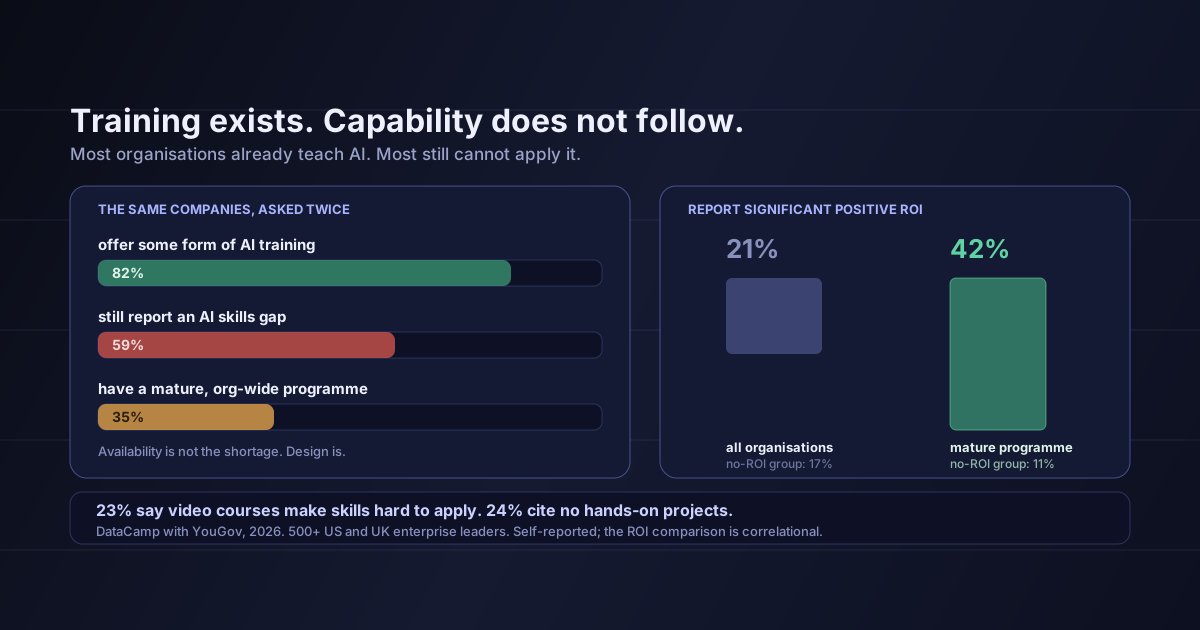
82% of enterprise leaders say their organisation provides some form of AI training. 59% say their organisation has an AI skills gap. Those are not contradictory findings. They are the same finding, stated twice.
The source is a 2026 DataCamp and YouGov survey of more than 500 US and UK enterprise leaders. It is worth reading in full, but the structure of the result is what matters here.
The training paradox, in the leaders' own answers
Provision is high. Maturity is not.
Read that ladder from the top and it descends in exactly the way you would expect if availability were being mistaken for capability. Something is offered to nearly everyone. Something coherent is offered to about a third.
The leaders were asked why their training does not land, and their answers are unusually specific for survey data.
Video-based courses and blended online sessions are the most common format at 40%. They are also the most criticised: 23% say video courses make skills difficult to apply in the real world, and 24% cite a lack of hands-on projects or labs. Another 23% say learning paths are not tailored to specific roles, and 21% say employees simply cannot tell where to start.
Nobody in this data is complaining that the content was wrong. They are saying it never made the jump from watched to used.
That distinction is the whole article. A video course transfers recognition — you will know what RAG is when someone says it. Applying it to your own data, on your own deadline, with your own mess, is a different skill, and it is not the one that was taught.
If the pessimistic reading were right, none of this would be worth spending money on. It is not right, and one figure shows why.
Across all organisations, 21% of leaders report significant positive ROI from AI investment and 17% report none at all. Among organisations with a mature AI upskilling programme, significant ROI nearly doubles to 42%, and the no-ROI group falls to 11%.
What that comparison does and does not establish
It is a correlation, not a controlled result — companies that build mature programmes are plausibly better at execution generally, and that shows up in both numbers. What it does establish is that the ceiling is much higher than the average, and that the difference travels with programme design rather than with the existence of a training budget. If you are going to spend, the spend is not the decision. The shape is.
The easy assumption is that the skills gap closes on its own as tools get better. The 2026 evidence points the other way, because the tools are becoming something you supervise rather than something you operate.
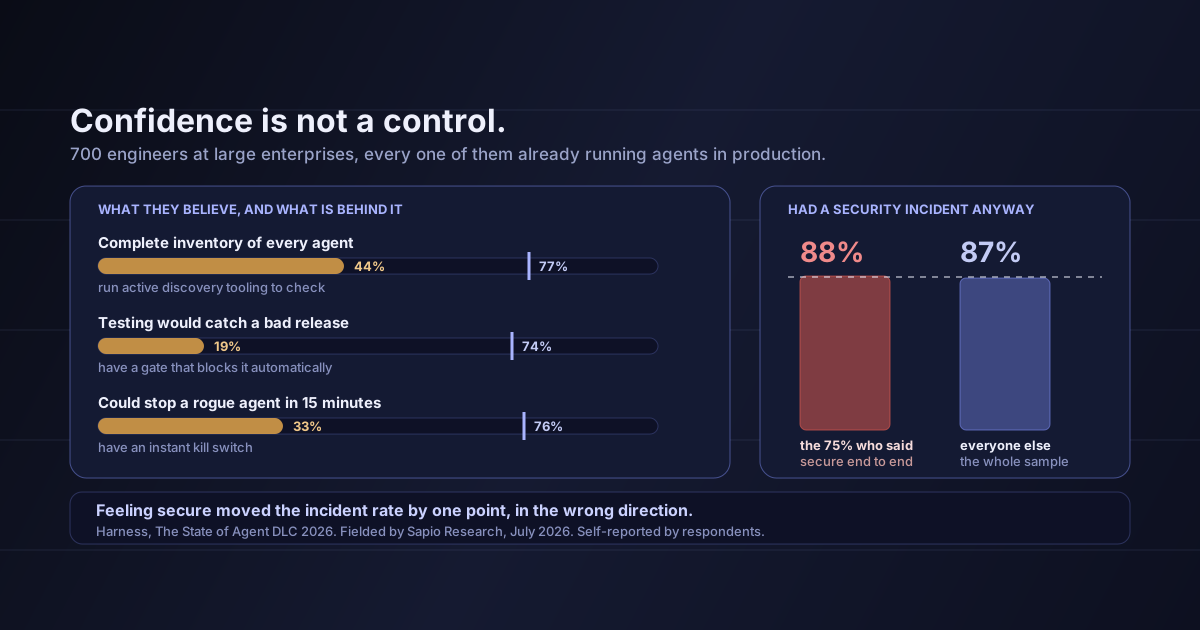
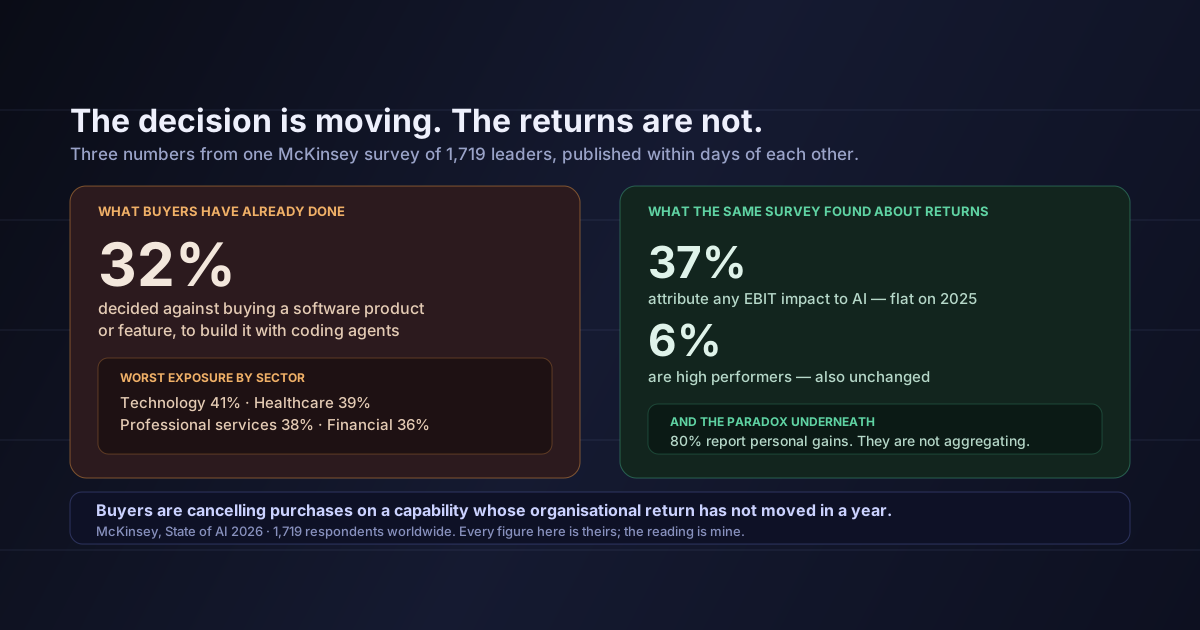
Three findings from this year, all covered here previously:
Each of those is a decision problem, not a tool problem. Which is consistent with the survey's own conclusion: the capability gaps leaders named were about interpretation, trust and decision-making rather than technical skill.
Here is the checklist I would apply before paying for training of any kind. It is deliberately usable against our own programme, and I will hold it to the same standard in the next section.
We run AI training as IdeaToMVP Academy, and this is where I should be straight about what is evidence and what is intent.
The track record is real and checkable. We ran a 30-day intensive Gen AI cohort on-site at TCS Chennai, taking enterprise teams from fundamentals to building real AI workflows, and we continue to run an ongoing online cohort for TCS professionals. We partner with LearnQuest on project-based online programmes and with Chitkara University on campus Gen AI programmes. The team teaching has shipped 15+ AI products.
The Founder AI Sprint has not run yet. The founding cohort starts 28 September 2026. It is $499 for that cohort, down from $799, with 20 seats — and the price rises once there are graduates to quote, which is a pricing decision that exists precisely because there is no outcome data yet. Anyone selling you a founder AI course with graduate statistics this month is describing a cohort that has not finished either.
Here is how it is designed against each finding above:
The Sprint, mapped to the survey's complaints
Four weeks, eight live sessions, two per week, recordings included
For leadership teams there is a separate private programme, The AI Boardroom, for 10–30 seats: AI opportunity mapping across business functions, a build-vs-buy-vs-wait framework, real TCO and vendor evaluation, and a one-page AI roadmap for the company. That one is priced per engagement rather than per seat, because the useful version of it is specific to your P&L.
Training is not sufficient. The DataCamp finding on maturity is about whole programmes — governance, role clarity, ongoing practice — not about any single course. Four weeks will make you capable of scoping and directing AI work. It will not make your organisation mature, and anyone promising that in a month is selling you the 82% column.
The ROI comparison is correlational. I said so in section 3 and it stays true in section 6. Our programme being designed against the complaints does not entitle us to the 42% number.
Some of you should not take a course at all. If you have a specific product to ship and a budget, hiring the build is faster than learning it. The sprint is for founders who need to make AI decisions repeatedly — which is most of them, but not all.
The 2026 data does not say AI training does not work. It says most of it is shaped wrongly: widely available, thinly designed, delivered as video, and evaluated by completion rather than by whether anyone can now do the thing.
The fix is not more hours. It is training where the output is an artefact you own, the sessions are live enough to answer questions only you have, and the people teaching have shipped the thing they are describing.
82% of organisations already pay for AI training. The 59% with a skills gap are, to a large extent, the same organisations. Which one you end up in is decided by what you buy, not whether you buy.
Sources: DataCamp, "The AI Skills Gap in 2026: Why Most AI Training Isn't Translating to Workforce Capability" · DataCamp, "The State of Data and AI Literacy in 2026" · Survey conducted by DataCamp with YouGov among 500+ US and UK enterprise leaders; all training and ROI figures are as reported there and are self-reported by respondents. The agent-governance figures are from Harness's State of Agent DLC 2026 and the build-versus-buy figures from McKinsey, both covered previously here. Academy programme details — dates, pricing, seat count, curriculum and refund terms — are ours and are current as at publication; the Founder AI Sprint has not yet run, which is stated in section 6 rather than left to inference. For the governance gap these skills are needed against, see the agent confidence gap.
IdeaToMVP Academy
4-week live cohort for founders. Learn to ship AI agents, scope MVPs, and automate your business — taught by the same team that writes these guides.