Kirkland Is Spending $500M to Build Its Own AI. The Expensive Part Was Never the Code

By Surya Pratap
September 4, 2026
11 min read
AI & Technology

September 4, 2026
11 min read
 The commitment, and the staffingHover to explore
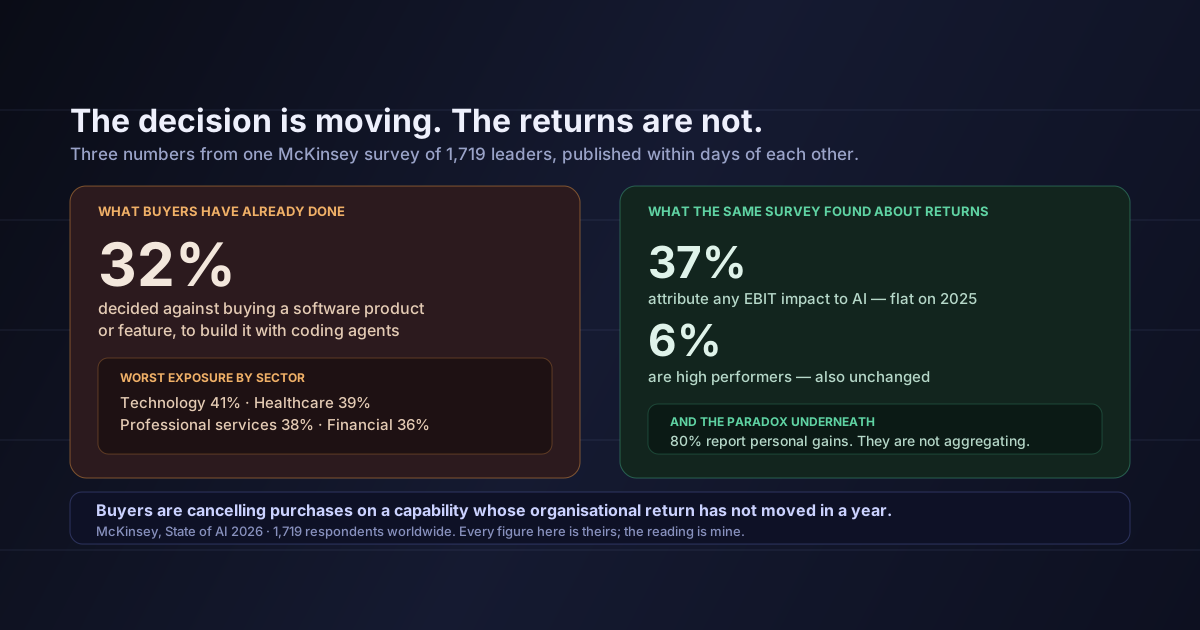
On Monday I wrote about McKinsey finding that 32% of organisations had decided against buying software because they could build it with agentic coding tools. That is a survey statistic, and survey statistics are easy to nod at.
This week the same decision arrived with a price tag attached.
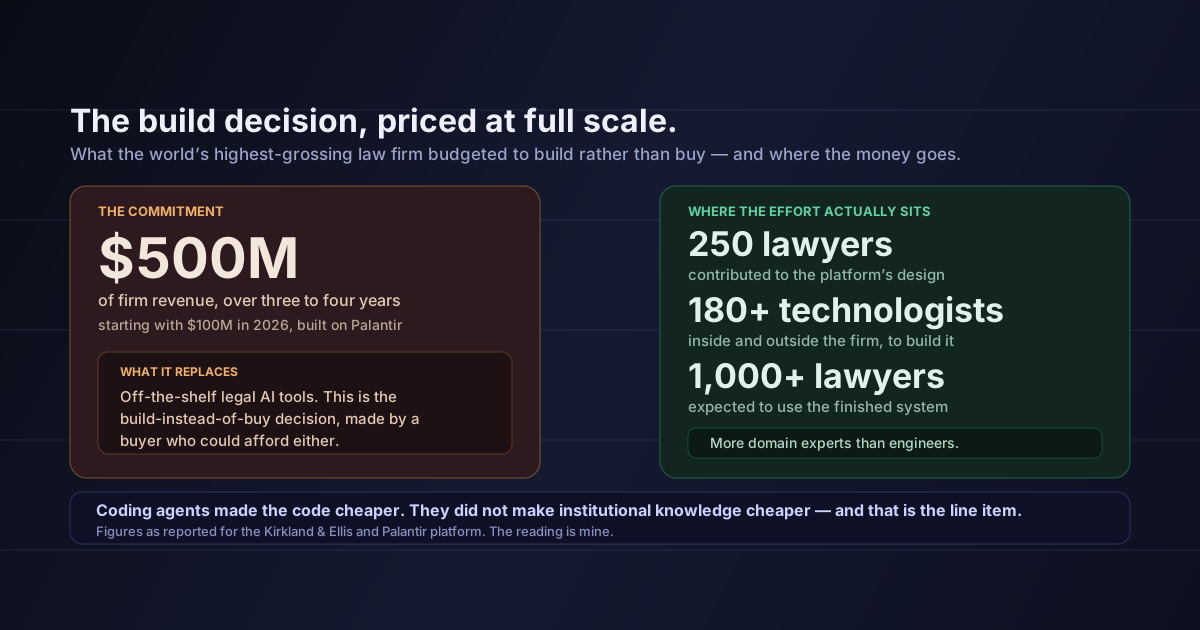
Kirkland & Ellis, the world's highest-grossing law firm, is committing $500 million of its own revenue over the next three to four years — starting with $100 million in 2026 — to build a custom AI platform on Palantir's technology, rather than rely on off-the-shelf legal AI tools.
The reported shape of it:
The Kirkland & Ellis platform, as reported
One of the largest technology commitments a law firm has made
That is not a procurement decision. That is a software company being assembled inside a law firm, with a four-year runway and a headcount most Series B startups would envy.
Every write-up leads with the $500 million. The number I would put on the slide is a ratio.
250 lawyers to design it. 180 technologists to build it.
More domain experts than engineers. On a software project.
Sit with that, because it is the opposite of what the prevailing story predicts. If the constraint on building were writing code, and coding agents have made writing code dramatically cheaper, then the engineering side should dominate the effort and the whole thing should be far cheaper than half a billion dollars.
It is not, and it is not. The expensive input is getting what senior lawyers know out of their heads and into a system — the judgement, the precedents, the firm-specific way a deal gets papered. Agents did not make that cheaper. They arguably made it more valuable, because now there is somewhere to put it.
This is exactly the thing I argued survives
In Monday's piece I said what an internal rebuild cannot cheaply reproduce is "accumulated edge cases, the data you hold, the integrations you have already certified, the compliance surface you have already passed — none of it in the spec, all of it in the price." Kirkland's budget is the empirical version of that claim. They are not paying $500 million for code. They are paying it for four years of extracting, structuring and encoding what the firm already knows, plus getting a thousand lawyers to actually use the result.
Kirkland makes the McKinsey number concrete at the very top of the market, and it cuts both ways.
It confirms the direction. A buyer with unlimited access to vendors looked at the available legal AI products and decided the important version had to be built. That is a real signal about where the value sits in knowledge-heavy industries, and software founders selling into those industries should take it seriously.
It also prices the alternative honestly. Most of the 32% in that survey are not budgeting $500 million and four years. They are budgeting a couple of engineers and an optimistic quarter. Kirkland is what the decision looks like when someone actually costs it out — and the gap between those two versions is where a lot of build decisions are going to go wrong.
The Kirkland numbers are a useful yardstick precisely because they come from a buyer who can afford to get it right.
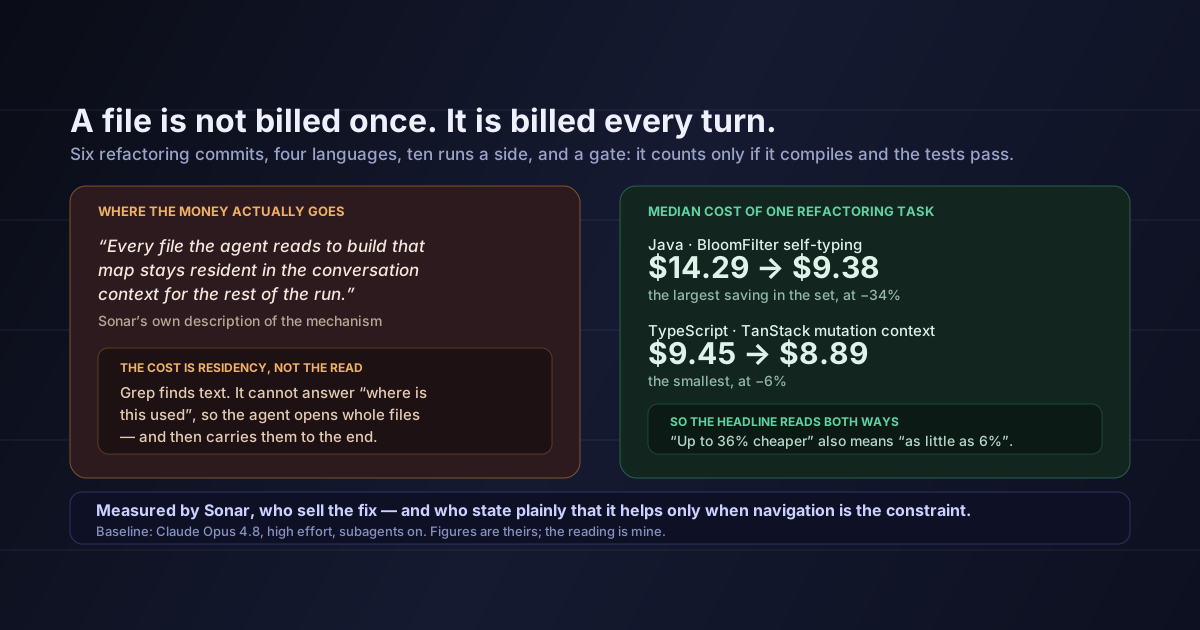
There is also a cost floor worth remembering from yesterday's piece on agent token spend: a single refactoring task measured at up to $14.29 in model spend. Build projects of this shape do not just cost salaries and time; they carry a running meter that most business cases have never included.
This is not proof that buying is dead. It is one firm, in one industry, with unusual economics — a partnership model where the people whose knowledge is being encoded are also the owners funding the encoding. That alignment is rare and it materially changes the calculus.
The $500 million is a commitment, not a result. It is spread over three to four years and it started this year. Nothing has been proven about whether the platform works, gets adopted by those 1,000 lawyers, or returns anything. The interesting checkpoint is 2028, not now.
The staffing ratio is reported, not audited. "Roughly 250 lawyers contributed to the design" covers a lot of ground, from a workshop attendee to someone seconded for a year. I am reading a real signal into it, and it is worth holding that reading loosely.
The largest law firm in the world costed out "build instead of buy" and arrived at $500 million, three to four years, 250 lawyers designing, 180 technologists building, 1,000+ lawyers using. It is the McKinsey statistic with the invoice attached.
The lesson is not that everyone should build. It is that the cost of building was never mostly the code, which means the thing agentic coding tools got cheaper is not the thing that makes these projects expensive. Knowledge capture, integration and adoption are the budget. They were the budget before agents, and they still are.
For founders that cuts in a reassuring direction and an uncomfortable one at the same time. Your buyers can now build the software part more easily than ever. They still cannot cheaply build the part where you know something they do not — and if you cannot name what that is, Kirkland's spreadsheet is not your problem, your positioning is.
Sources: Reuters via Yahoo Finance, "Law firm Kirkland to spend $500 million developing its own AI platform" · Bloomberg Law, "Kirkland's $500 Million AI Gambit Requires a Cast of Hundreds" · Kirkland & Ellis press release on the Palantir partnership · The Global Legal Post · Spend, timeline and staffing figures are as reported; the ratio argument and the cautions in section 6 are mine.
IdeaToMVP Academy
4-week live cohort for founders. Learn to ship AI agents, scope MVPs, and automate your business — taught by the same team that writes these guides.