AI Agent Pricing After Seats: A Founder’s Guide to Outcome-Based Pricing in 2026

By Surya Pratap
July 22, 2026
8 min read
MVP Strategy

July 22, 2026
8 min read
Seat-based SaaS pricing was built for software that helps a person do more work. AI agents complicate that bargain. If an agent resolves a support case, reconciles an invoice, qualifies a lead, or produces a compliance packet, the customer is not really buying another login. They are buying work completed.
That creates an attractive pricing opportunity, but it also creates a trap. Founders hear “outcome-based pricing” and jump straight to a revenue-share promise before they have a dependable way to define, measure, or control the outcome. The better move is to align price with value while keeping the first commercial model simple enough to operate.
A seat is a useful proxy when every employee uses the product roughly the same way. An agent can create a much larger gap between users. One operations manager may configure a workflow that completes hundreds of tasks each week, while ten teammates only review exceptions. Charging eleven seat licenses can make the agent look overpriced to the buyer and underpriced to the founder at the same time.
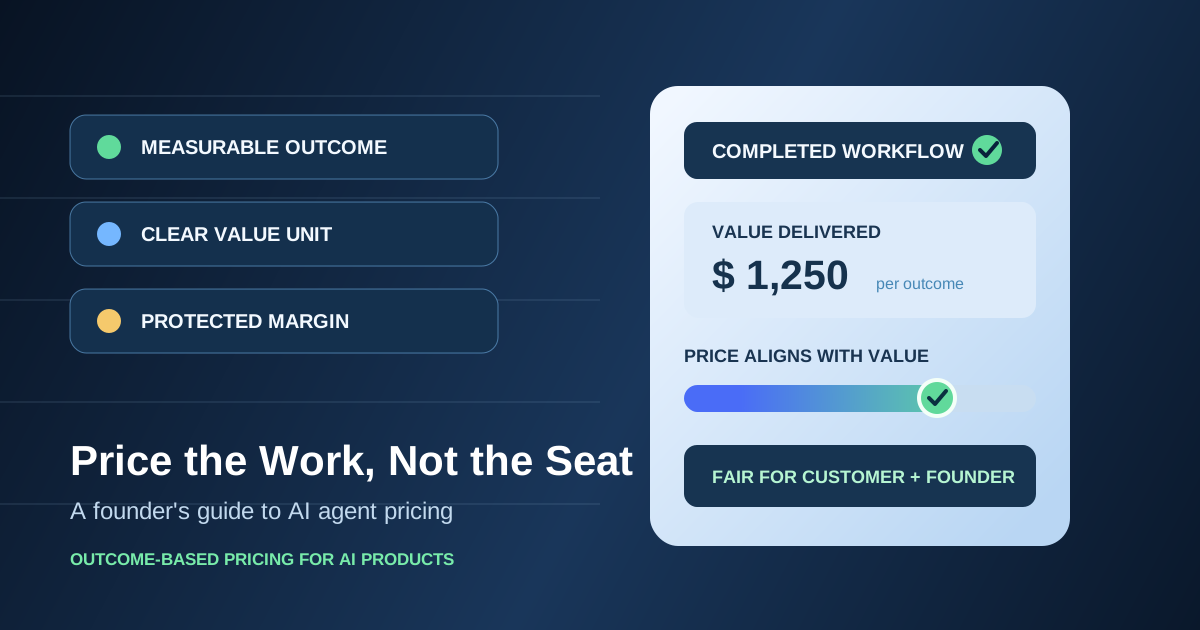
A value-aligned unit makes the commercial conversation clearer: cases resolved, documents processed, qualified meetings, shipments reconciled, or hours of manual review eliminated. The unit should be something the customer recognizes in an existing report—not a proprietary AI metric that requires a presentation to understand.
The pricing-unit test
A strong unit is observable, attributable to the product, difficult to manipulate, and valuable enough that the buyer can estimate its worth. If you cannot explain how it is counted in one sentence, it is not ready to be your invoice line.
Start one layer closer to the work than the customer's headline business result. A sales agent should not initially charge a percentage of closed revenue; too many factors outside the product determine a deal. It might instead charge per sales-ready opportunity that meets agreed criteria. A support agent should not promise a reduction in churn; it can charge per case resolved without human intervention, subject to a quality threshold.
Your inference bill matters to margin, but it should not become your value metric. Customers do not care that a task used a particular number of tokens. They care whether the task was finished accurately and safely. Price a completed workflow around its economic value, then use model routing, caching, and product design to protect the cost of delivery.
This separation also gives the product team freedom. You can improve the underlying model, add verification steps, or use a smaller model for routine work without forcing a customer to renegotiate every time your infrastructure changes.
Outcome pricing should be a two-sided contract. Define what counts, the data source used to count it, the review window, and what happens when a customer disputes a result. Set a monthly minimum so onboarding and support are funded. Set a usage cap or a tiered rate so a successful customer does not create unbounded delivery cost. Make any human-review requirement explicit.
The first contract does not need perfect mathematics. It needs a reliable operating rhythm. If your team has to manually reconcile every invoice for three days, the pricing model is not yet a product feature—it is a consulting engagement wearing a SaaS label.
Do not confuse a pilot with a discount. The pilot should answer whether customers perceive the unit as fair and whether you can deliver it profitably. If the measured outcome is valuable but the count is disputed, improve observability. If it is easy to count but not valuable, move closer to the customer's real job.
Most early AI products should begin with a platform fee plus an included volume of outcomes, then charge for usage beyond that level. The base fee protects onboarding, support, and product access. The variable component proves that you are aligned with value. It also leaves room for enterprise buyers who need a predictable annual commitment.
The goal is not to sound innovative on a pricing page. The goal is to make a customer say, “If this agent works, paying you more is obviously worth it.” When that relationship is true, the AI agent has moved from an interesting tool to a durable business.
IdeaToMVP Academy
4-week live cohort for founders. Learn to ship AI agents, scope MVPs, and automate your business — taught by the same team that writes these guides.