From Idea to MVP with AI Agents: How 2026 Founders Should Change Their Approach

By Surya Pratap
March 11, 2026
7 min read
AI Agents · MVP Strategy

March 11, 2026
7 min read
In 2022, “idea to MVP” meant a 6–12 month journey: hire a team, write specs, design screens, sprint for weeks, and hope you guessed right. In 2026, Twitter/X is full of solo founders shipping meaningful products in 6 weeks with a couple of AI agents and a browser-based IDE. The process hasn't just gotten faster — it's fundamentally different.
 Interactive overviewHover to explore
Across case studies and Twitter/X founder threads, a clear pattern emerges: founders who win with AI agents don't just “use AI more.” They change the shape of their process. They treat agents like junior teammates with narrow, well-defined jobs, instrument everything from day one, and reserve human attention for product judgment, not boilerplate.
A modern MVP is not just a thin feature slice. It's a learning machine built around your core user action — and AI agents make it cheap enough to include pieces that used to be “later:” analytics, basic monetization, email, and internal tools.
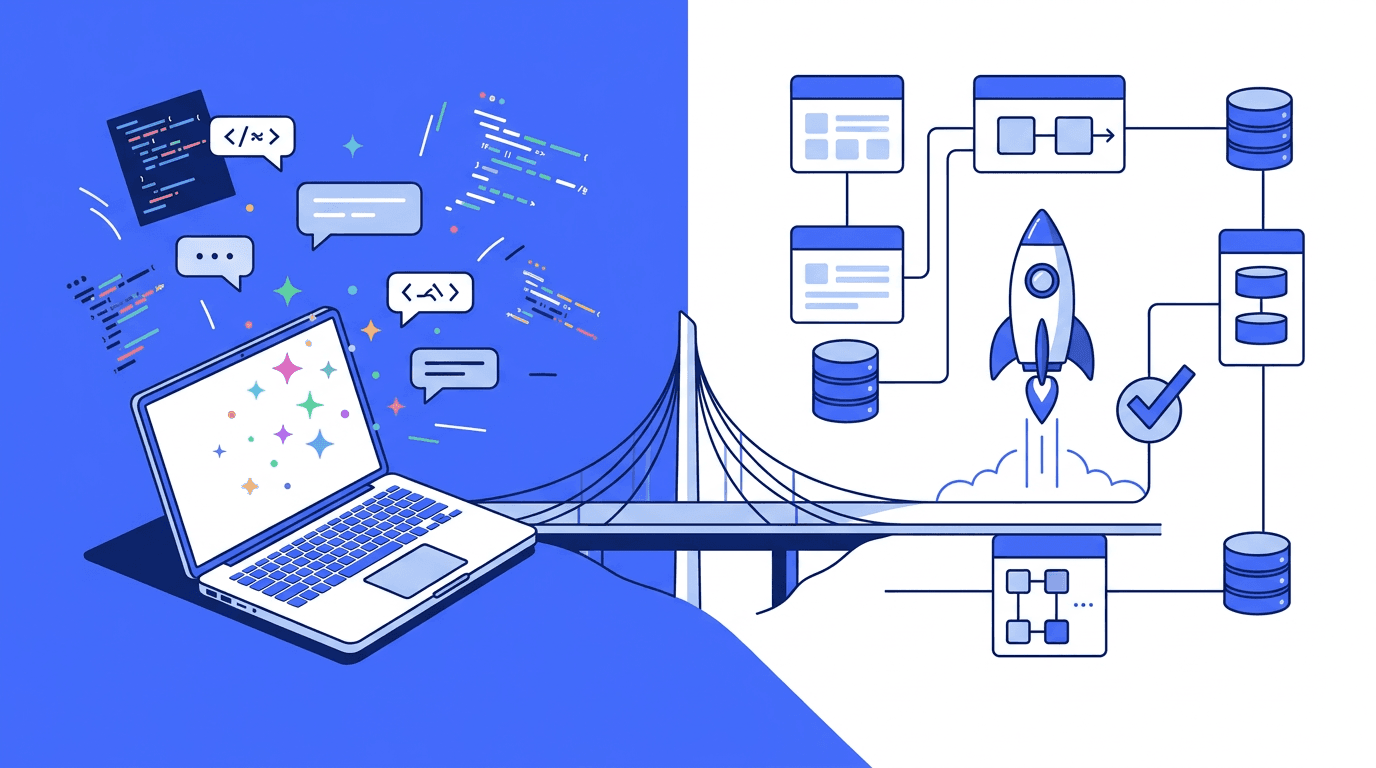 Old vs new approachHover to explore
The best Twitter/X case studies don't show a founder “letting the agent build everything.” They show a founder acting as PM + tech lead with agents playing focused roles:
Your job is to write crisp prompts that look suspiciously like tickets: clear outcome, constraints, examples, and definition of done. That's exactly what founders in popular X threads are doing when they ship 40+ agent-assisted sprints as a solo dev.
“AI agents don't remove the need for product thinking. They remove the excuse of ‘we don't have the engineering bandwidth to test this.’”
Based on what's working in 2026, here's a realistic 6-week plan you can run with one human and a couple of agents:
 MVP roadmapHover to explore
The dark side of “vibe coding with AI” is all over Twitter/X: founders who shipped fast but ended up with unmaintainable code, no tests, and no clear domain model. Avoid that by adding a few non-negotiable constraints:
Used this way, AI agents don't replace your product process; they amplify every good decision you make and make it radically cheaper to test bad ones quickly.
IdeaToMVP Academy
4-week live cohort for founders. Learn to ship AI agents, scope MVPs, and automate your business — taught by the same team that writes these guides.