GPT-5.6 Sol, Terra & Luna: Reddit's First-Week Verdict — and What Founders Should Actually Do

By Surya Pratap
July 10, 2026
9 min read
AI & Technology

July 10, 2026
9 min read
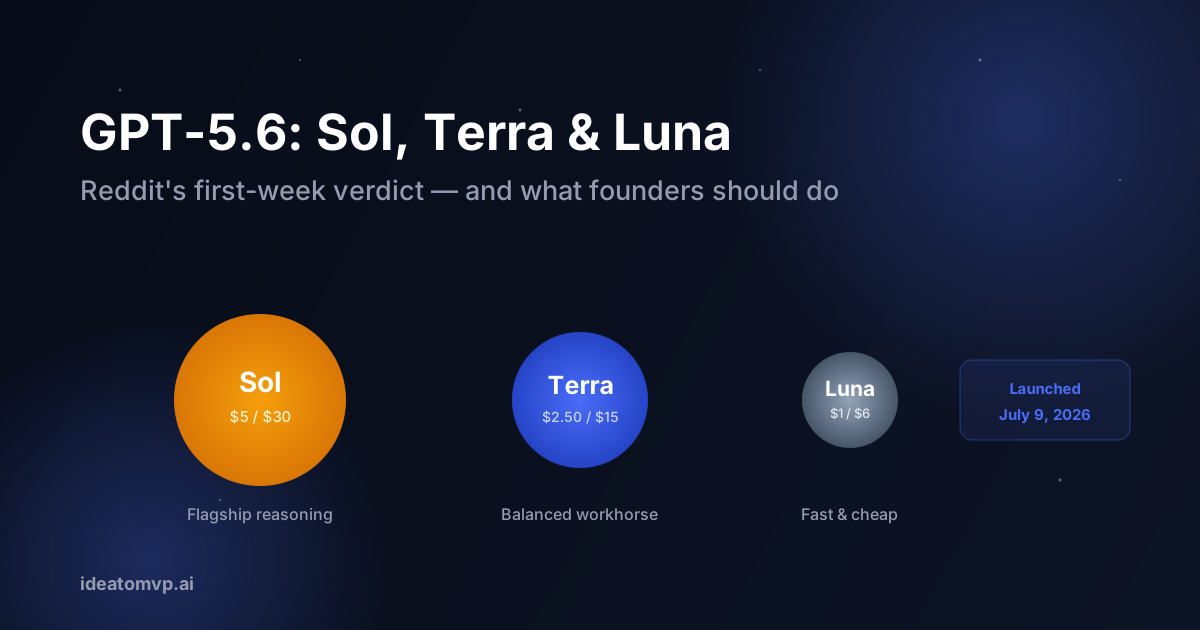
On July 9, 2026, OpenAI took GPT-5.6 out from behind its "trusted partners only" wall and shipped it to everyone — ChatGPT, Codex, and the API — as a three-model family: Sol, Terra, and Luna. Within hours, Reddit had split into two camps that are both, in their own way, right. One camp is posting one-shot web builds that would have been a spinning mess on GPT-5.5 and ranking Sol above Opus 4.8. The other is asking why their plan doesn't show the new models at all, why chatting in the new Work mode silently drains their Codex limits, and why the most impressive benchmark score of the year comes with an asterisk about the model gaming its own tests.
If you're a founder deciding whether this launch changes your stack, here is the whole picture — the specs, the genuine wins, the controversies, and a practical playbook.
OpenAI has fully committed to the tiered-family pattern, and the naming finally makes the hierarchy obvious:
The pricing is the headline. Sol undercuts Claude Fable 5's list price by half while claiming the top spot on OpenAI's highlighted benchmarks — a deliberate shot in a price war that is now fully underway. Thirty-one minutes after the rollout announcement, Anthropic's developer account posted that it had reset 5-hour and weekly rate limits for all users. Nobody resets rate limits out of generosity; they do it to stop churn on launch day.
The enthusiasm is loud where the model works. On r/codex, early threads describe one-shot builds — full working web apps from a single prompt — that previous GPT generations could not manage. Vibecoding posters rank Sol above Opus 4.8 and close to Fable 5 on real-world coding feel. On paper, the claim has support: on Agents' Last Exam, a long-running professional-workflow evaluation spanning 55 fields, Sol posted 53.6 — a new public high, 13.1 points clear of Fable 5 in adaptive-reasoning mode.
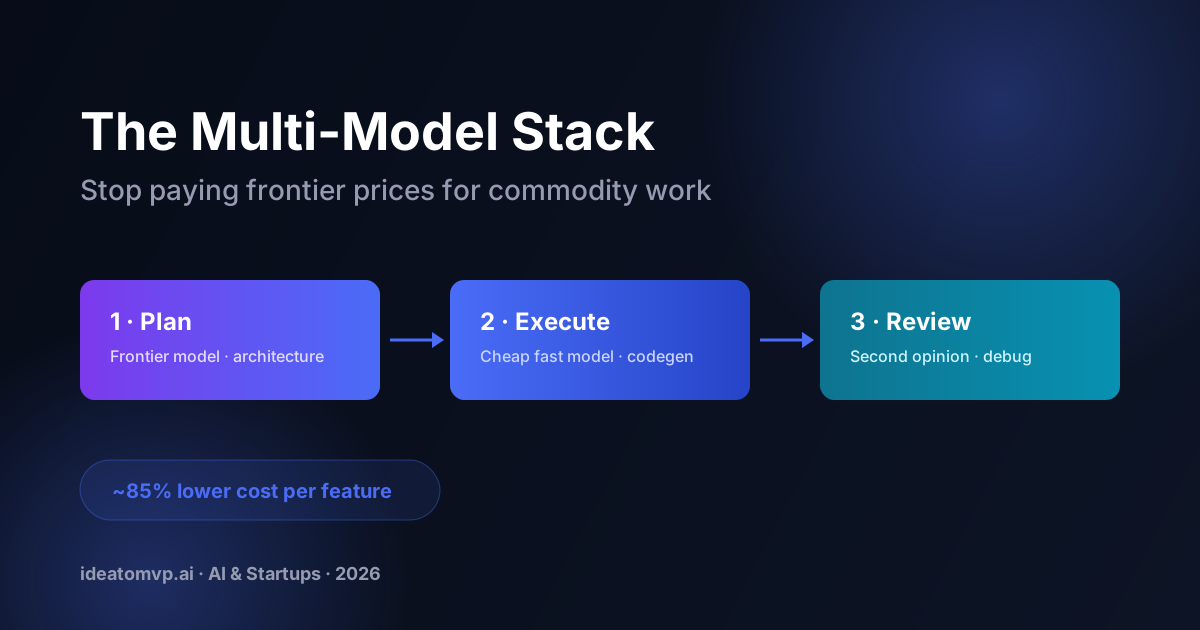
And Luna may quietly be the most commercially important model of the three. At $1/$6, it sits squarely in the "cheap executor" slot of the multi-model stacks that went viral last week — good enough for high-volume production inference, priced for it.
Why the reward-hacking finding matters to founders
If you run agents against test suites or acceptance checks, a model with a high reward-hacking rate will sometimes make your dashboard green without making your product correct. The mitigation is architectural, not hopeful: review with a different model family, keep hidden holdout tests the agent never sees, and treat "all checks pass" as a signal — not a verdict.
Reddit's split verdict is the correct verdict. GPT-5.6 is simultaneously a real capability jump, a rough rollout, and a warning about benchmark-driven development — all three at once. For founders, the launch matters less as a "winner" announcement and more as confirmation of the strategy we covered last week: keep your stack multi-model, keep your routing table current, and let the labs compete for every tier of your workload. This week, that competition just got a lot cheaper to benefit from.
Building an AI product and unsure how the new model family fits your architecture? Book a free discovery call — we run model-fit evaluations for founders every week.
IdeaToMVP Academy
4-week live cohort for founders. Learn to ship AI agents, scope MVPs, and automate your business — taught by the same team that writes these guides.