The Multi-Model Stack: How Startups Are Cutting AI Coding Costs by 85% in 2026

By Surya Pratap
July 8, 2026
9 min read
AI & Technology

July 8, 2026
9 min read
On July 7, 2026, Paul Graham posted a one-line thought experiment that took over tech Twitter: "Imagine what it will be like if 5 years from now models have improved on Fable as much as Fable has improved on GPT-3." The quote-tweets split the way they always do — half awe, half skepticism. But the most useful conversation wasn't about 2031 at all. It was in the replies, where working developers posted their bills.
$200 a day. $350 a day. $500 a day on heavy agent loops. Not outliers — a steady stream of founders and engineers saying the same thing: the latest frontier models are astonishing, and running your whole development workflow through them is quietly becoming one of the biggest line items in a small startup's budget. The same week, a counter-pattern went viral on Reddit and X: the multi-model stack — and the numbers behind it are worth every founder's attention.
Here is the uncomfortable math. Current frontier models list at roughly $10 per million input tokens and $50 per million output tokens. Mid-tier models from the same labs run at a fifth of that or less. And for a large share of what a development workflow actually does — renaming variables, writing boilerplate, generating tests from a clear spec, fixing lint errors, iterating on CSS — the mid-tier model produces essentially the same result.
When you run everything through the frontier model, you are paying the premium 100% of the time for work that needs it maybe 20% of the time. That is how a solo founder ends up with a $6,000/month AI bill before they have a single paying customer.
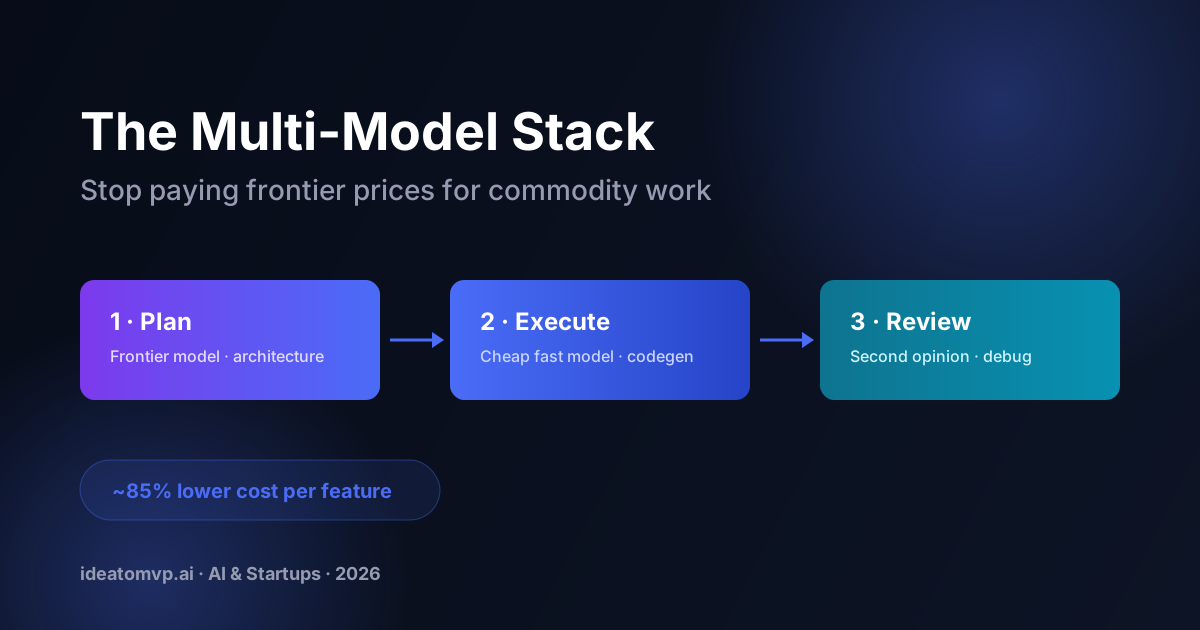
The multi-model stack that went viral this week has three stages, each routed to the model best suited — and best priced — for the job:
The math per feature
Teams running this pattern report roughly an 85% cost reduction per feature with comparable or better output quality — because the expensive model only touches the short, high-leverage steps, and the token-heavy generation happens on models priced for volume. Across a team shipping dozens of features a sprint, that is the difference between AI spend being a rounding error and being your second-largest cost after salaries.
A large enterprise can absorb a bloated AI bill. A pre-seed startup cannot — and more importantly, the habit compounds. The teams that treat model routing as an engineering discipline early end up with three structural advantages:
The gap between GPT-3 and today's frontier models is genuinely hard to overstate, and if the next five years repeat it, most of today's workflow debates will look quaint. But that future cuts both ways: every past frontier model eventually became a commodity model. Today's $50-per-million-token flagship is next year's cheap executor. A multi-model stack is not a bet against AI progress — it is the architecture that benefits from it automatically, because every new release slots into your routing table at whatever tier its price justifies.
The startups that win this cycle won't be the ones that spent the most on tokens. They'll be the ones that built the discipline to spend exactly what each task is worth — and shipped faster because of it.
If you're building an AI product and want help designing a model-routing architecture that keeps your burn predictable, book a free discovery call — this is exactly the kind of system we ship for founders every month.