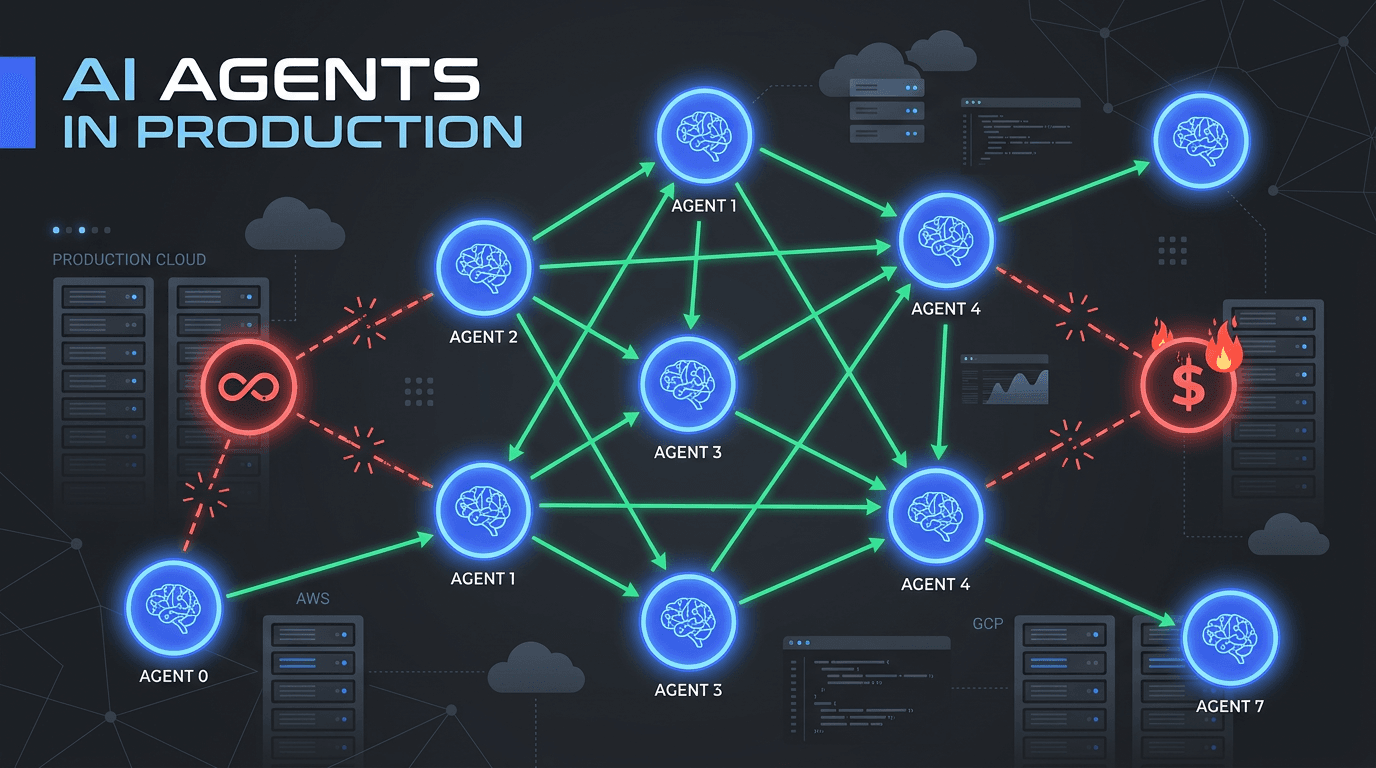
Claude Opus 4.7 and the AI Impact on MVP Development in 2026

By Surya Pratap
April 17, 2026
AI Impact · Claude · MVP

April 17, 2026
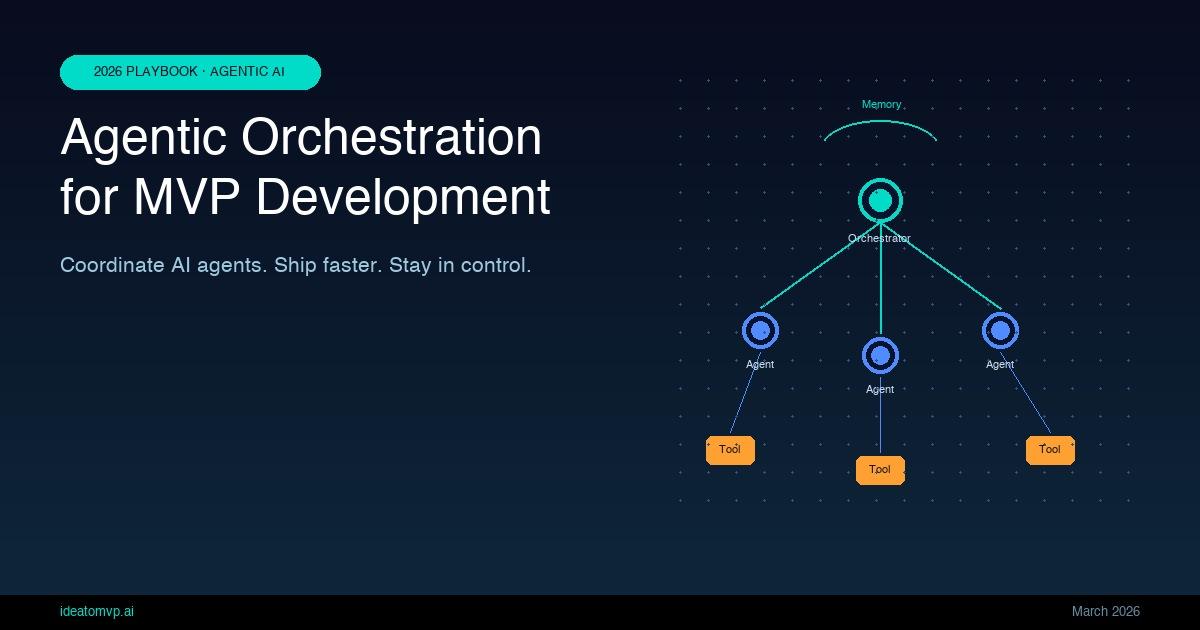 AI impact lensHover to explore
When we talk about AI impact on MVP development, we mean measurable shifts in how fast teams ship, how often agents fail in production, and how confidently you can validate before you scale spend. Claude Opus 4.7 (released April 16, 2026) is the clearest 2026 inflection point on that curve for teams on Anthropic—especially if you build coding agents, document-heavy workflows, or vision-first products. This article maps the release to founder outcomes, not leaderboard theater. For the broader AI-on-MVP thesis, see our AI impact on MVP development & validation guide.
xhigh effort tier can improve quality per dollar—but recalibrate for the new tokenizer on your prompts.Opus 4.7 didn't arrive in a vacuum. In the weeks before launch, a viral post from an AMD Senior Director accused Opus 4.6 of regressing to the point it “cannot be trusted to perform complex engineering.” The complaint resonated — analysts confirmed the degradation was real and worst on exactly the tasks power users care about: long-context coding, multi-step reasoning, and iterative problem-solving. Opus 4.7 is Anthropic's direct answer to that criticism. It also ships alongside the acknowledgement that Anthropic's most capable model, Claude Mythos Preview, remains gated to a small number of handpicked technology and cybersecurity firms — making 4.7 the best model most builders will ever touch.
The single most behaviorally distinctive change is that Opus 4.7 proactively verifies its own outputs before reporting back. It writes tests, runs sanity checks, and inspects results — without being asked. Vercel engineers documented this in production: “The model runs proofs on systems code before starting work — you did not ask for that step. The model added it.” For founders building agentic workflows, this changes the reliability calculus significantly. You're no longer solely responsible for catching the model's mistakes — the model is doing some of that work itself.
Images can now be up to 2,576 pixels on the long edge (~3.75 megapixels), up from ~1.15 megapixels in Opus 4.6. Visual-acuity accuracy jumped from 54.5% to 98.5%. The visual reasoning benchmark CharXiv went from 69.1% to 91.0% with tools. The trade-off: full-resolution images consume approximately 3x more tokens, so image-heavy pipelines will need cost recalibration.
A new xhigh effort level sits between the existing high and max tiers, giving developers finer control over the reasoning/latency/cost trade-off. Claude Code now defaults to xhigh for all subscription tiers. At xhigh with 100K tokens, performance on agentic coding benchmarks sits at 71% — close to the 74% achieved at max with 200K tokens, at a fraction of the cost.
A new task budgets feature lets developers set advisory token caps on full agentic loops. If you have ever watched an autonomous agent quietly burn through tokens on a runaway task, this is the guardrail you have been asking for. It is in public beta, but it works today.
Opus 4.7 interprets prompts more literally than its predecessor. For production reliability this is a win — the model does what you say, not what it guesses you meant. The downside: prompts that relied on Opus 4.6 filling in gaps may behave differently and will need to be made more explicit. If you migrate existing agents, budget time for prompt re-tuning.
“Low-effort Opus 4.7 is roughly equivalent to medium-effort Opus 4.6 — meaning similar output quality at a lower compute tier.”
— Hex Engineering, early access report
Benchmarks are marketing until production data backs them up. Here is what partner companies reported after early access:
The one notable regression: BrowseComp dropped 4.7 points to 79.3%, a softening in web browsing comprehension. Worth watching if your product relies heavily on live web retrieval.
The Hacker News thread was predictably nuanced. The optimism was real — confidence restored after the Opus 4.6 regression scare, stronger performance at the 200K token range, and genuine excitement about self-verification. But the criticisms were specific:
disable adaptive thinking flag is not reliably honoured, limiting manual control over reasoning depthPricing is unchanged from Opus 4.6: $5/million input tokens and $25/million output tokens for standard context. Extended context beyond 200K tokens costs $10/$37.50 per million. Prompt caching saves up to 90%. The batch API gives a 50% discount for async workloads. Context window is 1M input tokens with a 128K maximum output.
The model (ID: claude-opus-4-7) is available now on claude.ai Pro/Max/Team/Enterprise, the Anthropic API, AWS Bedrock, Google Vertex AI, Microsoft Foundry, and GitHub.
If you have production integrations on Opus 4.6, these changes will bite you if you skip the migration guide:
thinking: {type: "enabled", budget_tokens: N} syntax returns a 400 error — update your API callstemperature, top_p, and top_k values are now rejected"display": "summarized"For founders building AI-native products, Opus 4.7 changes a few practical decisions:
Agentic features are more viable at MVP stage. The self-verification behavior and the MCP-Atlas gains (+14.6 points) mean that multi-step autonomous workflows are meaningfully more reliable than they were six months ago. Features that previously required heavy human oversight to be production-safe are now closer to ship-ready.
Cost math has shifted. The xhigh effort tier plus the finding from Hex — that low-effort Opus 4.7 matches medium-effort Opus 4.6 — means you can get equivalent quality at lower per-call cost. But the new tokenizer counteracts this partially. Model the actual token counts on your real prompts before projecting unit economics.
Hallucination behavior has improved for data-driven use cases. Hex specifically noted that the model now “flags missing data instead of inventing plausible-but-wrong fallbacks.” For any product that surfaces data to end users, this is a meaningful reliability improvement — and one that is hard to capture in a benchmark number.
IdeaToMVP Academy
4-week live cohort for founders. Learn to ship AI agents, scope MVPs, and automate your business — taught by the same team that writes these guides.