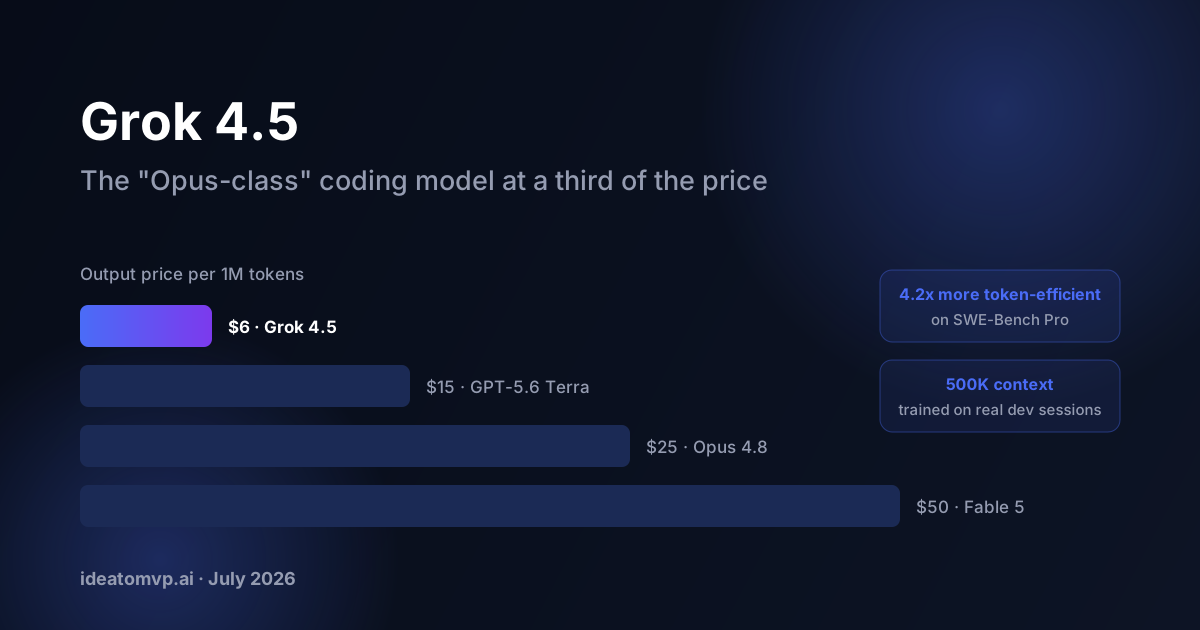
July 2026 will be remembered as the month the model wars turned into a price war. One day before OpenAI shipped GPT-5.6, xAI released Grok 4.5 — its first model trained specifically for coding and autonomous agents — at $2 per million input tokens and $6 per million output. Elon Musk's positioning was characteristically blunt: "It is an Opus-class model, but faster, more token-efficient and lower cost." Not the smartest model in the world — the most economical one that is good enough for real engineering work.
That framing — "cheaper and good enough" as a headline strategy rather than an apology — is new for a frontier lab, and the reactions across X and LinkedIn over the launch week split along exactly that line. Here is what the model actually is, what the early users are saying, and how a founder should think about it.
What Grok 4.5 Actually Is
- A coding-first, agent-first model. xAI trained it on real developer session data from its Cursor partnership — full sessions inside real codebases, not just static code corpora. The design target is an agent that survives a long session without going off the rails.
- $2 / $6 per million tokens, 500K context. That is over 60% cheaper than Opus 4.8 and GPT-5.5 on list price, with cached input at $0.50.
- Extremely token-efficient. On SWE-Bench Pro, xAI reports Grok 4.5 resolves tasks in an average of ~16K output tokens versus ~67K for Opus 4.8 in max mode — a 4.2x gap. Since output tokens are what you pay most for, efficiency multiplies the sticker discount: Artificial Analysis measured it at $0.49 per completed task, nearly 90% cheaper than the models above it on their leaderboard.
The Benchmarks, Honestly Read
The honest picture is mixed, and more interesting for it. On Artificial Analysis's Intelligence Index, Grok 4.5 scores 54 — fourth overall, behind Fable 5 (60), Opus 4.8 (56), and GPT-5.5 (55). Of the four benchmarks xAI chose to publish, it beats Opus 4.8 on two (DeepSWE 1.0 and Terminal-Bench 2.1) and loses on two (DeepSWE 1.1 by 6 points, SWE-Bench Pro by 4.5).
In other words: it is not the best model. It is a legitimately frontier-adjacent model at a fraction of the cost per task — and xAI is not pretending otherwise. Musk himself framed the goal as "closing the loop on real-world usefulness, not benchmarks," citing that hardcore engineers at Tesla and SpaceX find it genuinely useful.
What X and LinkedIn Are Saying
- Early Cursor users are impressed. The most-shared early review, from developer Danny Limanseta, called it "Opus 4.8 at 2x the speed at a much cheaper price point" after a full brainstorm-plan-implement session on a complex game feature with no manual corrections needed between steps.
- The LinkedIn take is about the business model. The commentary that traveled furthest wasn't about capability at all — it was that a frontier lab is now competing primarily on price-per-completed-task, which analysts framed as the metric that could rattle both Anthropic and OpenAI's margin structure.
- Skeptics note the benchmark selection. Publishing the two benchmarks you win alongside the two you lose earns some credibility — but critics on X pointed out that "Opus-class" compares against Anthropic's previous tier, not Fable 5. Even Musk's own comparison was to "roughly Opus 4.7."
The number that matters: cost per completed task
Per-token pricing is the sticker; cost per completed task is the bill. A model that is 20% less capable but uses 4x fewer tokens and costs 60% less per token wins the economics on every task it can actually finish. The right question is never "is it smarter?" — it is "what share of my workload can it complete, and at what cost per completion?"
Where Grok 4.5 Fits in a Startup's Stack
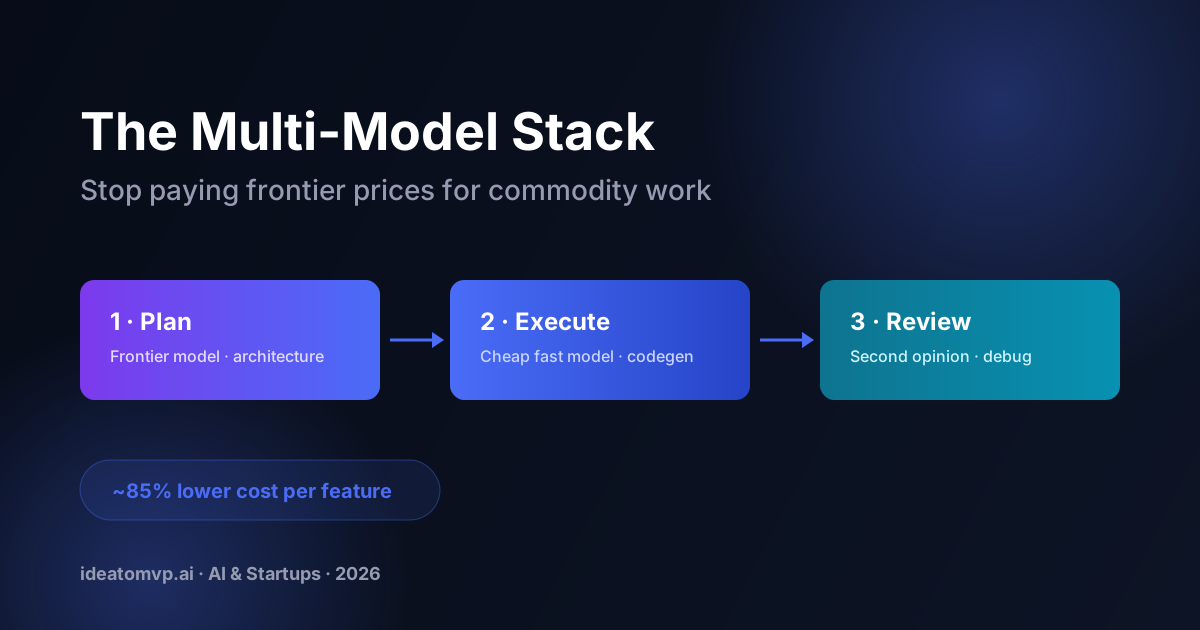
- The executor slot just got a serious contender. In the plan → execute → review stack we covered last week, Grok 4.5 lands squarely in the execute tier — with more capability than the usual cheap executors. For agentic coding loops where token burn is the pain, its efficiency profile is exactly what the $200-a-day crowd has been asking for.
- Long sessions are its home turf. Trained on real full-session data with a 500K context, it is built for the "keep working in this codebase for an hour" pattern rather than one-shot snippets. Benchmark it on your longest-running agent workflows first.
- Keep planning and review elsewhere for now. Fourth place on general intelligence is excellent for the price, but architecture decisions and final review still belong with the strongest reasoner you can afford — and cross-family review matters more, not less, as every lab optimizes harder for agentic benchmarks.
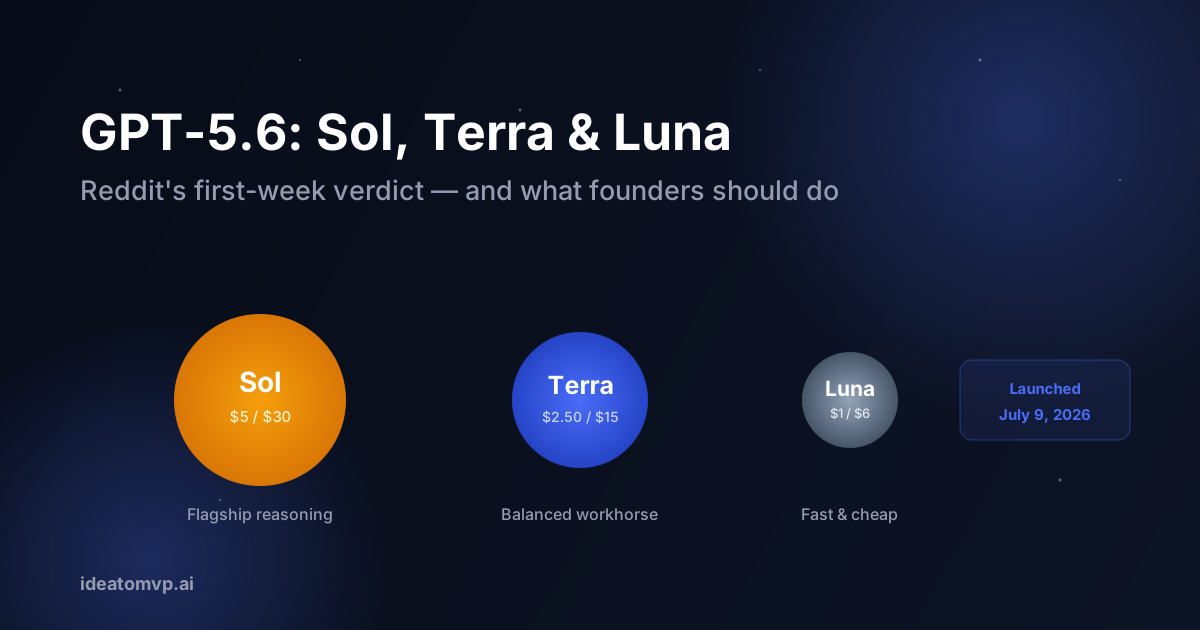
- Use the three-way price war. Grok 4.5 on July 8, GPT-5.6 on July 9, Anthropic resetting rate limits within the hour — three frontier labs are now bidding for your workload in the same week. If you locked in AI vendor pricing more than a quarter ago, you are overpaying.
The Bottom Line
Grok 4.5 is the clearest signal yet that the frontier is splitting into two races: one for maximum intelligence, and one for minimum cost per completed task. Founders don't have to pick a side — a well-routed stack benefits from both. Slot Grok 4.5 into your executor tier, run it against your real workloads for a week, and let the numbers — not the launch tweets — decide how much of your workload it earns.
Want help benchmarking the new models against your actual product workloads? Book a free discovery call — we build and tune model-routing stacks for founders every month.