Removing Expense Leakage Using Agentic Flow: The 2026 Founder's Guide

April 11, 2026
14 min read
The Association of Certified Fraud Examiners estimates that organizations lose 5% of annual revenue to occupational fraud and abuse. Accounts payable firms put the duplicate-payment rate for large enterprises at 0.5–2% of invoice volume. Gartner research puts SaaS waste at 30–40% of software spend. And none of these numbers include the quieter losses: contract over-billing, rogue purchasing, and approval policy drift.
The problem is not that companies lack data. Every ERP has the invoices. Every contract management tool has the rates. Every expense tool has the receipts. The problem is that no system is connecting the dots across all of it, in real time, at every transaction. Rule-based automation catches the obvious cases. It misses the subtle ones.
Agentic AI changes that calculus. A well-designed agentic flow can ingest every invoice, check it against every active contract, validate it against approval policy, and flag statistical anomalies — all before payment is released. This guide covers how to build it.

TL;DR
- Companies leak 5–15% of spend through duplicate invoices, contract non-compliance, rogue purchasing, and subscription sprawl — most of it invisible to traditional controls.
- Agentic flow replaces point-in-time audits with a continuous, multi-agent pipeline that checks every transaction before it is approved.
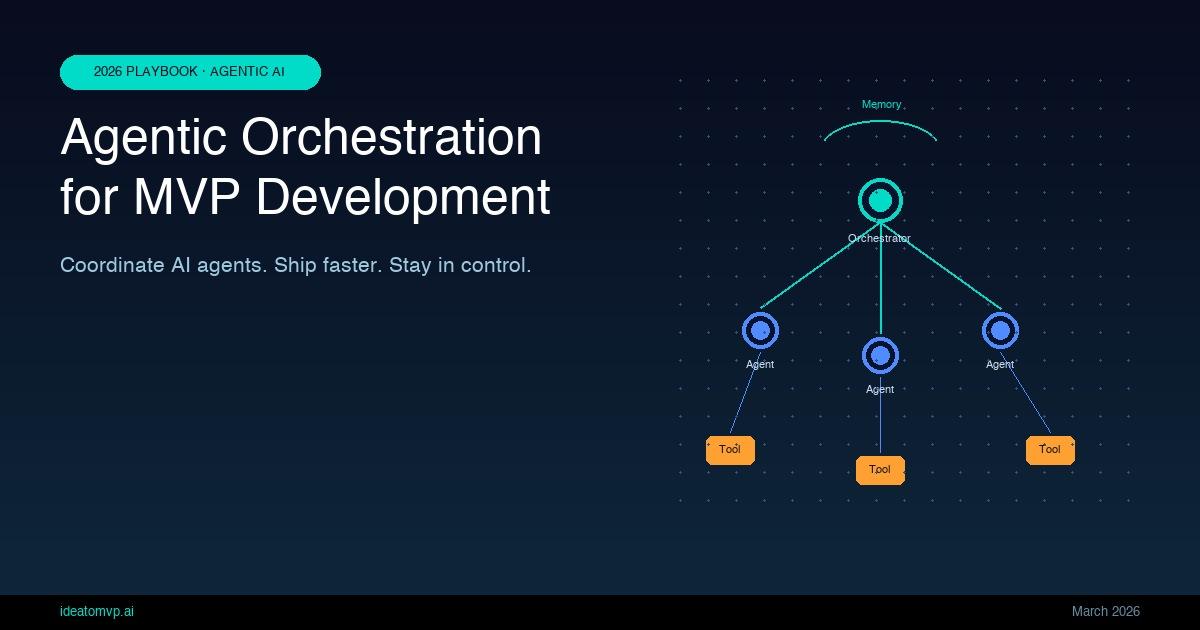
- The core architecture: a Document Ingestion Agent, Duplicate Detection Agent, Contract Compliance Agent, Policy Enforcement Agent, Anomaly Detection Agent, and an Orchestrator.
- Start with duplicate detection — highest ROI, fastest to ship. Add contract compliance next. Anomaly detection requires a baseline and comes last.
- Human-in-the-loop review queues are non-negotiable. Agents flag and explain; humans decide on edge cases.
1. Where expense leakage actually comes from
Before designing any system, you need to know which leakage types you are targeting. They have different detection mechanisms and different urgency levels:
Duplicate invoices
2–4% of AP spendSame invoice submitted via multiple channels (email, portal, paper), processed by different team members, or re-submitted after a rejected batch. ERP systems catch exact duplicates but miss near-duplicates — same vendor, slightly different invoice number or date.
Contract non-compliance
1–3% of contract valueVendor charges a rate that differs from the contracted price — a 3% uplift on 200 line items, quietly accumulating over 12 months. No single transaction is large enough to trigger a manual review.
Rogue purchasing
Up to 5% of T&E budgetEmployees bypass procurement by using personal cards or shadow SaaS subscriptions, then expense them under ambiguous categories. Common in fast-growing teams where process has not caught up to headcount.
Approval policy drift
Cascading budget overrunsSpend limits set two years ago were never updated as the company scaled. Items that should require VP sign-off now auto-approve because the threshold was designed for a 20-person team, not a 200-person org.
Subscription sprawl
30–40% of SaaS spend wastedSaaS tools procured during a project, then abandoned — but still billing. Finance sees the charge monthly; nobody owns it; it passes through on the assumption someone must be using it.
Notice the pattern: none of these are single-event failures. They are process failures that compound across hundreds or thousands of transactions. A quarterly audit catches them after the money is gone. An agentic system catches them before payment is released.
2. Why traditional automation is not enough
Most AP platforms already have some automation: 3-way PO matching, exact-duplicate detection, budget threshold alerts. These work for the cases they were designed for. They break down on anything fuzzy.
Exact-duplicate detection misses an invoice where the vendor changed the invoice number by one digit. 3-way PO matching fails when a vendor delivers in partial shipments that do not map cleanly to line items. Budget alerts fire after the spend, not before. Contract compliance requires a human to manually pull the contract and check each line — which nobody does for a $4,200 invoice.
The gap is semantic understanding at scale. Rules operate on structured fields. Expense leakage hides in the relationship between documents, between transactions over time, and between what a contract says and what an invoice charges. That is where LLMs and agentic flow change the game.
3. The agentic architecture: six agents, one pipeline
A production-grade expense intelligence system needs six distinct agents. Each has a focused responsibility — specialization is what makes the system reliable. Here is what each agent does and why it exists separately:
Document Ingestion Agent
Extracts and normalizes data from any invoice formatReceives PDFs, images, EDI files, and HTML emails. Uses vision + OCR + extraction prompts to produce a canonical JSON object: vendor, amount, line items, dates, PO references, and payment terms. Runs on every new document, regardless of source channel.
Duplicate Detection Agent
Flags near-duplicate invoices before paymentEmbeds each normalized invoice into a vector store and performs similarity search against the last 18 months of paid invoices. Flags matches above a configurable threshold — not just exact matches, but fuzzy matches on vendor + amount + date proximity. Sends flagged pairs to a human review queue rather than auto-rejecting.
Contract Compliance Agent
Validates every line item against the master contractRetrieves the active contract for the vendor from the contract RAG store, extracts agreed unit prices and discount tiers, and compares them to the invoice line items. Produces a variance report: which lines match, which are over-billed, and by how much. Escalates invoices with variance above a set threshold to the procurement team.
Policy Enforcement Agent
Checks spend requests against current approval policyWhen a purchase request or expense claim is submitted, this agent retrieves the current approval policy for the category, requestor's role, department budget status, and spend history. It either auto-approves (within policy), routes to the correct approver (near-limit), or blocks and explains (over-limit or policy violation).
Anomaly Detection Agent
Surfaces statistical outliers in spend patternsRuns on a nightly batch, applying statistical models to vendor spend trends, category trends, and per-employee expense patterns. Flags deviations that are unlikely to be noise — e.g., a vendor whose monthly invoice jumped 40% with no corresponding PO change, or an employee whose monthly expenses are three standard deviations above their team average.
Orchestrator Agent
Routes documents and coordinates the agent pipelineThe entry point for every document and request. Determines which downstream agents to invoke, in what order, and with what context. Handles retries, tracks the state of multi-step workflows (e.g., an invoice that is in duplicate review AND contract compliance check simultaneously), and writes audit logs for every agent decision.
Architecture note
Run the Document Ingestion Agent and Duplicate Detection Agent synchronously — they must complete before payment can proceed. Run Contract Compliance and Policy Enforcement in parallel after ingestion. Run Anomaly Detection asynchronously on a nightly batch — it does not block individual transactions but surfaces patterns the synchronous agents cannot catch.
4. How to implement it: a phased rollout
Do not try to deploy all six agents at once. The data dependencies between phases are real — the anomaly layer requires months of baseline transaction data before it produces meaningful signals. Build in this order:
Unify your document intake
Expense leakage starts at ingestion — invoices arriving via five different channels with no normalization. Before any AI, build a single intake pipeline: email parser, vendor portal webhook, and a scan-to-upload flow. All documents land in one queue. The Document Ingestion Agent processes from there.
Build the contract and policy RAG store
Your agents are only as good as the reference data they check against. Parse every active vendor contract into a structured store: vendor ID, line-item prices, discount tiers, payment terms, and expiry dates. Do the same for approval policies — encoded as structured rules, not PDFs. This becomes the ground truth all compliance agents query.
Deploy duplicate detection as the first live agent
This is the highest-ROI first step. Embedding-based similarity search across your invoice history requires no complex reasoning — it is retrieval plus a threshold. Ship this in week one, connect it to a Slack or email alert for the AP team, and you will catch leakage within days. Measure it. Use the early wins to build internal buy-in for the fuller system.
Add contract compliance before the anomaly layer
Contract compliance is rule-based (compare invoice price to contracted price) but requires reliable document parsing and a clean contract store. Build and validate it before the anomaly layer, which requires several months of baseline data to be meaningful. Compliance catches known violations; anomaly detection catches unknown patterns.
Wire the orchestrator and human-in-the-loop queues
Agents should not auto-reject payments. Build a review queue where flagged items land with the agent's reasoning attached. Reviewers confirm or override. Every override is a label — feed it back to improve threshold calibration. The goal is not to remove humans from the loop; it is to make humans review only the items that actually need them.
5. Technology choices that matter
These are the stack decisions that will determine whether your agentic expense system scales or becomes a maintenance burden:
Document parsing: vision models over OCR rules
Invoice formats vary wildly. Hard-coded field extractors break on new vendor templates. Use a multimodal LLM (GPT-4o, Gemini 1.5 Pro, or Gemma 4 27B for on-prem) that can read any invoice layout and return structured JSON. The extraction prompt should specify the canonical output schema — vendor ID, invoice number, line items with unit price and quantity, subtotal, tax, total, and payment terms. Validate the JSON against a schema before downstream agents consume it.
Similarity search: embeddings, not string matching
For duplicate detection, embed a canonical invoice fingerprint (vendor ID + amount + approximate date + line item hash) and store it in a vector database such as Pinecone, Qdrant, or pgvector. On each new invoice, retrieve the top-10 nearest neighbours and apply a composite similarity score. This catches near-duplicates — same invoice, different reference number — that exact string matching completely misses.
Contract store: structured RAG, not document search
Do not store contracts as raw PDFs in a vector store and expect an LLM to extract rates reliably under time pressure. Pre-parse contracts into a structured database: vendor ID, line-item descriptions, agreed unit prices, discount schedules, and expiry dates. The Contract Compliance Agent queries this structured store directly — fast, deterministic, and auditable. Use an LLM only when contract language is ambiguous and human review is flagged anyway.
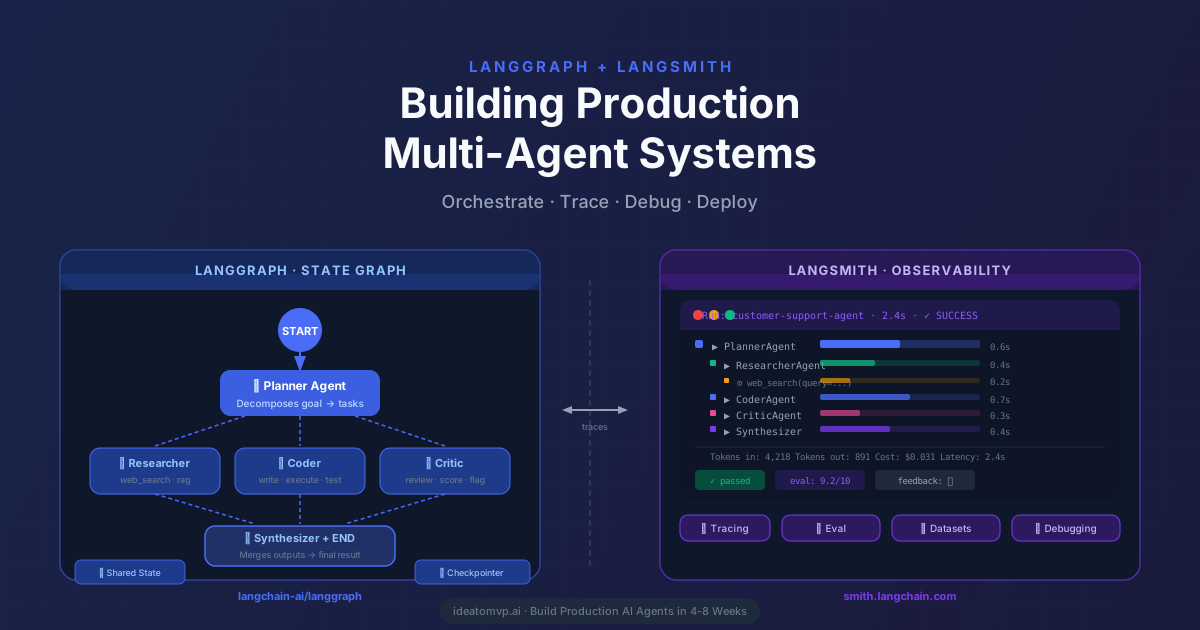
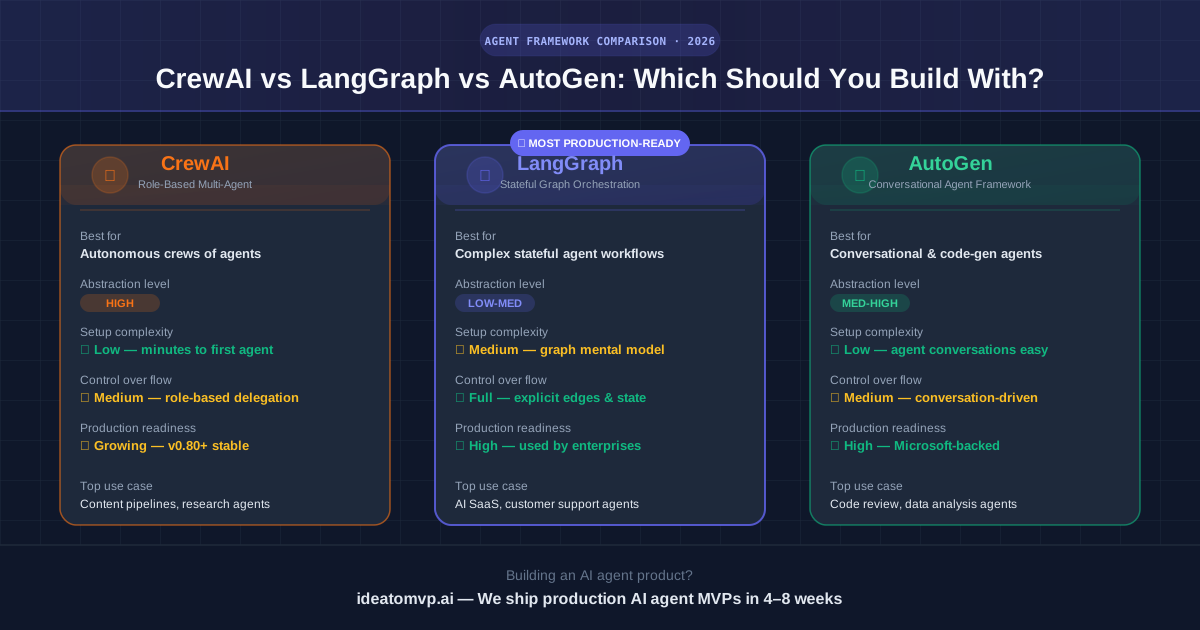
Agent orchestration: LangGraph for stateful workflows
Expense processing is a stateful, multi-step workflow — not a single LLM call. Use LangGraph to model the pipeline as a directed graph: nodes are agent steps, edges are conditional transitions (e.g., "if duplicate flagged, route to review queue; else proceed to compliance check"). LangGraph's persistence layer handles retries and state recovery across agent steps, which matters when processing thousands of invoices per day.
6. The human-in-the-loop design that makes it trustworthy
The fastest path to killing an agentic expense system is automating decisions people are not ready to trust. Agents that auto-reject payments create enemies on day one. Build the review queue first.
Every flagged transaction lands in a review queue with: the agent's specific finding, the evidence it used, and a confidence score. The reviewer clicks Approve (override the flag, log the reason) or Confirm (the flag was correct, hold or reject the payment). Both outcomes generate a label. After 500–1000 labeled decisions, retrain the confidence thresholds so the agents auto-approve high-confidence clean invoices and only surface genuinely ambiguous cases.
This is also your audit trail. Every agent decision — what it checked, what it found, what happened next — is logged. When a vendor disputes a held invoice, you have a timestamped record of exactly what the system detected and why.
7. Build vs buy: the honest framework
Whether you build this system or layer it onto an existing platform depends on your context:
| Scenario | Recommendation | Reason |
|---|---|---|
| You are building an expense management product for others | Build | Your differentiation is the agentic intelligence layer. Off-the-shelf tools give you parity with competitors, not an edge. Own the agent architecture — it becomes your moat. |
| You are an operator trying to fix your own internal spend problem | Buy first, build selectively | Evaluate Ramp, Brex, Spendesk, or Airbase — they have improving AI layers. Build custom agents only for the gaps they cannot close: proprietary contract formats, non-standard ERP integrations, or highly specific approval workflows. |
| You are in a regulated industry (healthcare, government, finance) | Build on open-weights | Invoice and contract data is sensitive. A fully on-prem agentic system using open-weights models (Gemma 4, Mistral, LLaMA) keeps all document intelligence inside your security boundary — no data leaves to a third-party API. |
The bottom line
Expense leakage is not a new problem. What is new is that the cost of catching it has dropped dramatically. Embedding models, vision LLMs, and agentic orchestration frameworks mean you can build a system that checks every invoice against every contract, every day, at a cost that makes economic sense — even for mid-market companies that cannot afford a dedicated AP audit team.
The founders who build this capability — whether as an internal system or as a product — are sitting on a compounding financial advantage. Every month the agentic pipeline runs, it recovers spend, tightens policy, and accumulates labeled data that makes the models more accurate. The return improves over time without additional headcount.
Start with duplicate detection. Ship it in two weeks. Measure the first recovery. Then build out the rest of the architecture with a compelling internal case study already in hand.
Building an expense intelligence product?
At Idea to MVP, we design and ship agentic AI systems for fintech and enterprise founders. If you are building an expense leakage product — or want to add this capability to an existing platform — we can help you go from architecture to production in 4–8 weeks.
Talk to us about your build