5 Common Mistakes to Avoid While Building Your MVP

By Surya Pratap
January 25, 2025
MVP Strategy

January 25, 2025

Building an MVP should be the fastest, cheapest way to test whether your startup idea has legs. But most founders turn it into something else entirely — a months-long development marathon that burns cash, misses windows, and produces a product nobody asked for.
After helping build 15+ MVPs and watching dozens more succeed or fail, the same mistakes show up over and over. Here are the 5 most common — and how to avoid each one.
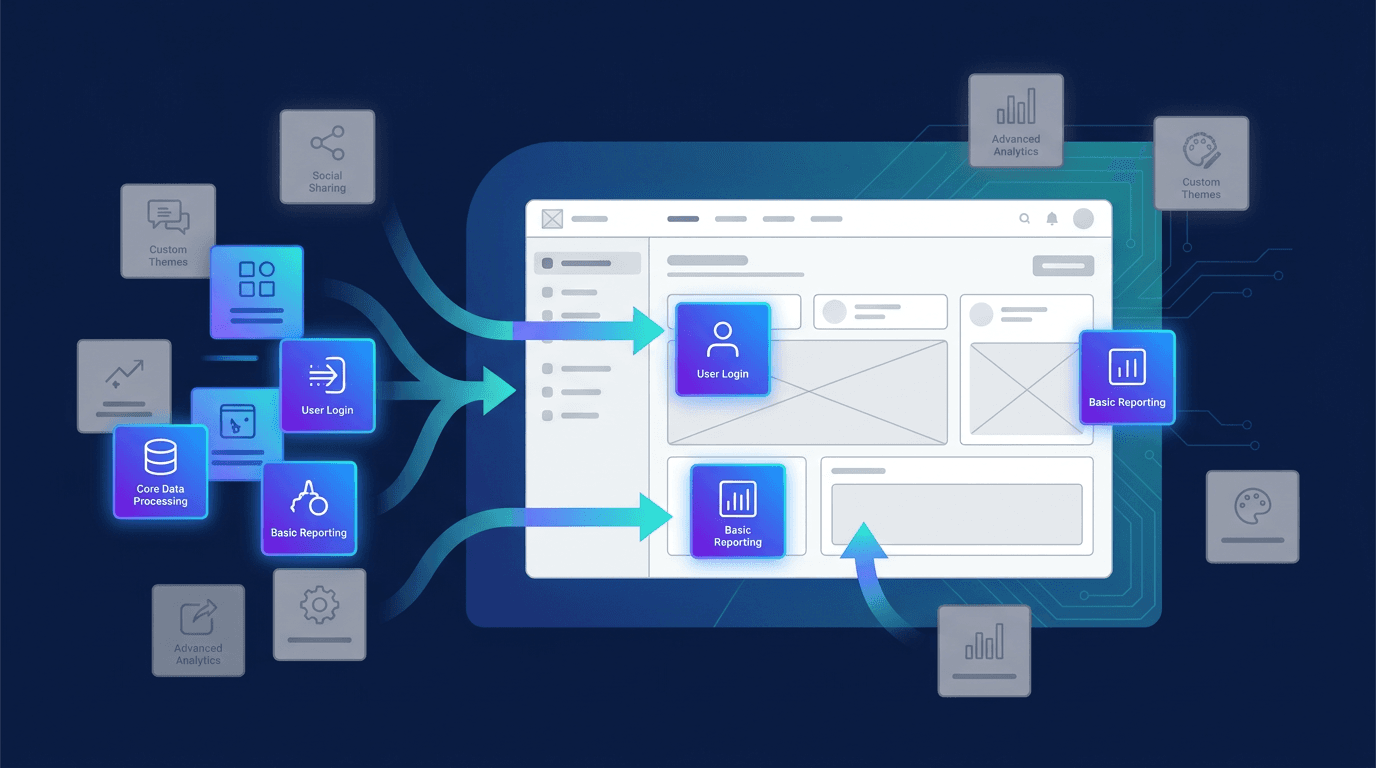
This is the #1 MVP killer. Founders confuse an MVP with a “version 1.0” of their full product vision. They add features because competitors have them, because investors might ask about them, or because “users will expect it.”
The result? A product that takes 6 months to build instead of 6 weeks, costs 5x the budget, and launches to discover the core hypothesis was wrong all along.
How to avoid it:
Apply the “one feature” rule: your MVP should solve one problem exceptionally well. If you can't describe what your MVP does in one sentence, you're building too much. Cut features until it hurts — then cut one more.
CB Insights reports that 35-42% of startups fail because there's no market need for what they built. Not bad execution. Not running out of money. Simply building something nobody wanted.
Many founders skip validation because they're excited about their idea and “just know” the market wants it. They interpret enthusiasm from friends and family as market demand. They treat their own pain point as universal.
How to avoid it:
Before writing code, validate with real potential customers. Talk to 20-30 people in your target market. Search Reddit and online communities for people complaining about the problem. Create a landing page and measure signup intent. The strongest validation: someone tries to pay you before the product exists.
“If you're not embarrassed by the first version of your product, you've launched too late.”
— Reid Hoffman, Co-founder of LinkedIn
Some founders treat launch day as the finish line. They ship the MVP, post it on Product Hunt, and then go heads-down building the next batch of features from their original roadmap — without pausing to listen to what actual users are saying.
The whole point of an MVP is learning. If you're not collecting, analyzing, and acting on feedback, you're just building a product in the dark with a slightly shorter timeline.
How to avoid it:
Set up feedback loops before you launch. Add in-app feedback widgets. Schedule user interviews in the first two weeks. Track the 40% test — if 40% of users say they'd be “very disappointed” without your product, you have product-market fit signals. Below that, iterate hard on what users tell you is missing.
“We'll launch when it's ready” is the most dangerous sentence in startup land. Perfectionism disguised as quality control keeps more products from reaching users than any technical limitation.
Founders spend weeks perfecting animations, debating color palettes, rewriting copy for the fifth time, or refactoring code that already works. Meanwhile, the market window is closing and competitors are shipping.
How to avoid it:
Set a hard launch deadline and work backward. Two rules: (1) if a feature isn't critical for the core value proposition, it goes in the “after launch” list. (2) if the UI is functional and not confusing, it's good enough. Early adopters care about solving their problem, not pixel-perfect design. You can always polish after you've validated.
Some founders over-engineer from day one — choosing microservices architecture, Kubernetes, and a complex CI/CD pipeline before they have a single user. Others go the opposite direction: they hire the cheapest freelancer on Fiverr and end up with code that can't be maintained, scaled, or even understood.
Both extremes waste time and money. Over-engineering delays launch. Under-engineering creates technical debt that costs 3-5x to fix later — if the codebase is even salvageable.
How to avoid it:
Choose boring, proven technology. Next.js, Rails, Django, or Laravel with a managed database (Supabase, PlanetScale) and a simple deployment (Vercel, Railway) will handle everything an MVP needs. For your team, find experienced developers who've shipped MVPs before — they know what to skip and what to get right the first time.
35%
Of startups fail from no market need
74%
Fail from scaling before product-market fit
3-5x
Cost to fix bad technical decisions later
Every one of these mistakes comes from the same root cause: treating the MVP as a product launch instead of a learning experiment. Your MVP isn't the final product. It's the fastest way to find out what the final product should be.
Validate before you build. Build the minimum. Ship fast. Listen hard. Iterate based on evidence. That's not just MVP strategy — it's survival strategy for startups.
“The biggest risk is not taking any risk. In a world that's changing really quickly, the only strategy that is guaranteed to fail is not taking risks.”
— Mark Zuckerberg
IdeaToMVP Academy
4-week live cohort for founders. Learn to ship AI agents, scope MVPs, and automate your business — taught by the same team that writes these guides.